


Advancing Endovascular Treatment: Personalized Device Design through Topology Optimization
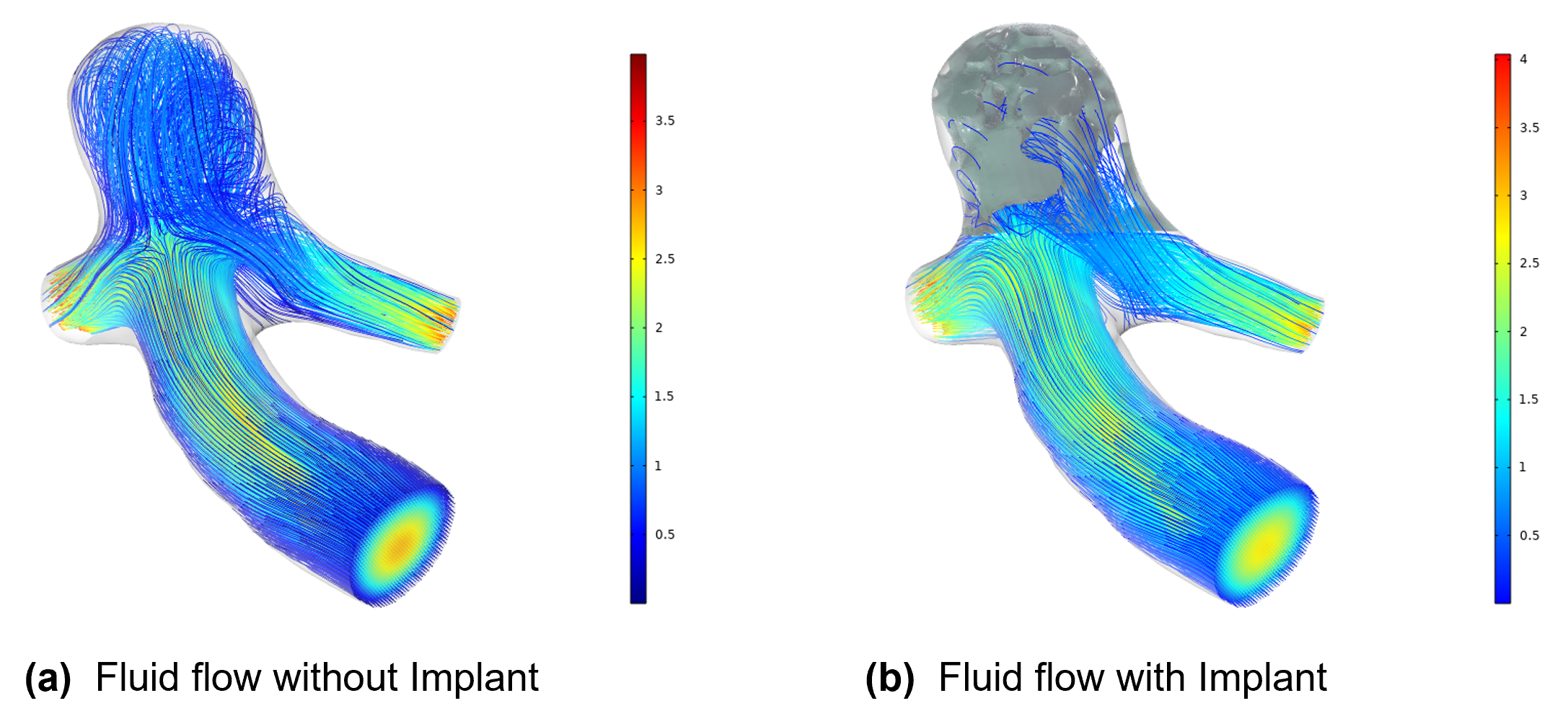 Associate Professor Shikui Chen along with Dr. Chander Sandasvian (PI, SBU Hospital) and Professor David Gu (CS Department)
were awarded an OVPR Seed Grant for their project "Advancing Endocascular Treatment:
Personalized Device Design through Toplogy Optimization." This project aims to improve
endovascular treatments for vascular diseases like brain aneurysms, aortic aneurysms,
and cardiac valve replacements.
Associate Professor Shikui Chen along with Dr. Chander Sandasvian (PI, SBU Hospital) and Professor David Gu (CS Department)
were awarded an OVPR Seed Grant for their project "Advancing Endocascular Treatment:
Personalized Device Design through Toplogy Optimization." This project aims to improve
endovascular treatments for vascular diseases like brain aneurysms, aortic aneurysms,
and cardiac valve replacements.
Current treatments face limitations due to the non-optimal fit of medical devices
to patient anatomy, leading to complications like recanalization, endoleaks, and paravalvular
leaks. The project proposes using advanced computational tools, 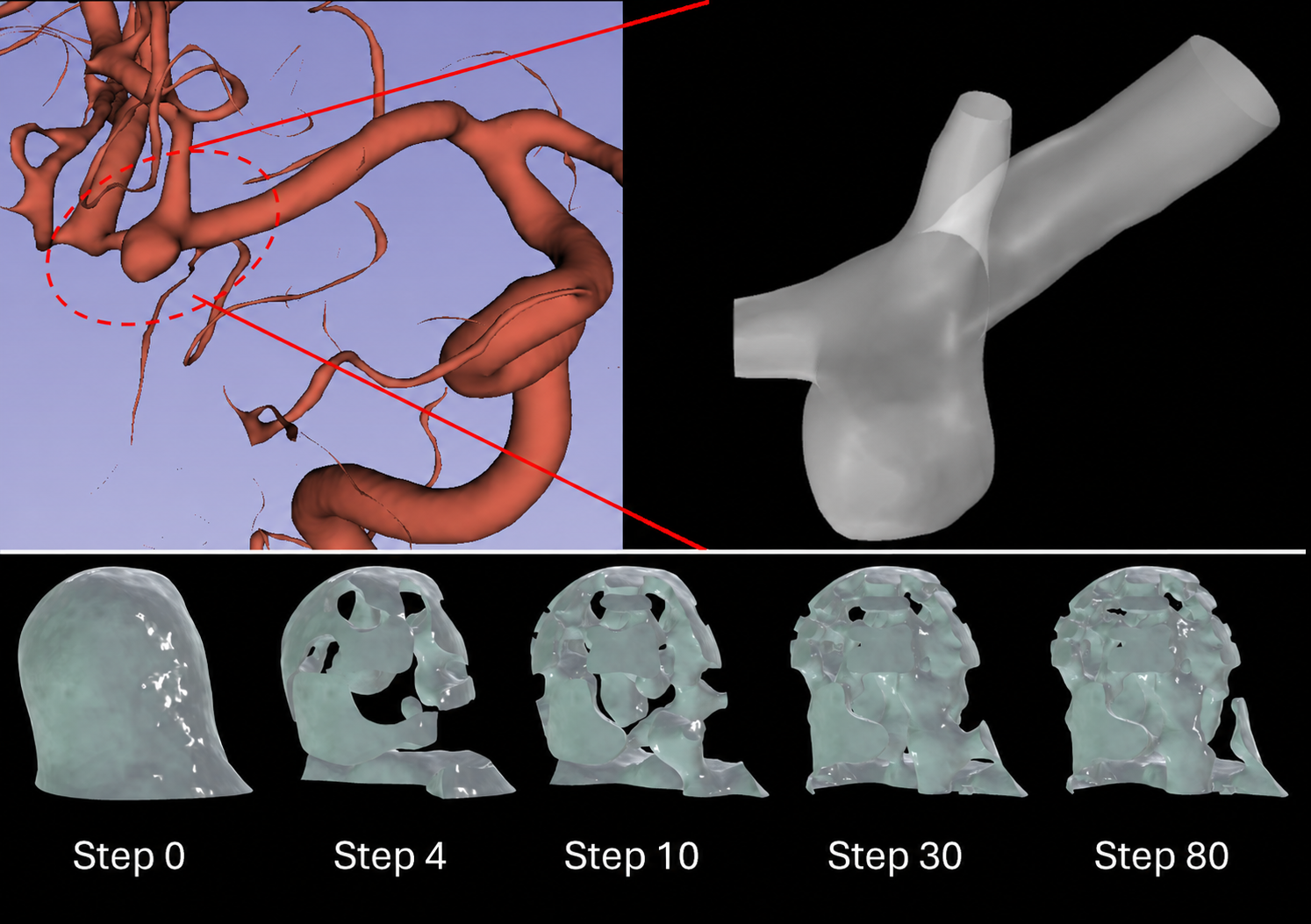 particularly Topology Optimization (TO) and computational conformal mapping, to design
personalized, patient-matched devices (PMDs).
particularly Topology Optimization (TO) and computational conformal mapping, to design
personalized, patient-matched devices (PMDs).
These tools will help simulate deployable structures that conform accurately to individual patients' vascular anatomy, thereby enhancing treatment efficacy and reducing complications. The project's goal, supported by an OVPR seed grant, includes two main aims: generating patient-specific device designs and enabling effective transcatheter deployment using TO and conformal mapping.