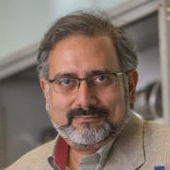
Design preview · Fictional faculty and illustrative content. Portrait photographs are borrowed placeholders.
Marine and Atmospheric Sciences
Alex Rivera
Professor of Atmospheric Sciences
School of Marine and Atmospheric Sciences
Division head, Atmospheric Sciences; affiliate, Example Coastal Center
Alex Rivera investigates coastal storms, heavy precipitation and forecast uncertainty using observations and numerical models. His interdisciplinary collaborations connect atmospheric science with coastal resilience, while his teaching emphasizes physical explanation and careful interpretation of evidence.
- Coastal weather
- climate resilience
- forecasting
CV updated 2026-10-04
Overview
Biography
Alex Rivera is a professor of atmospheric sciences whose research examines the processes that shape weather along coastlines. His work combines observations, numerical simulation and uncertainty analysis to understand how ocean conditions, terrain and atmospheric circulation influence regional hazards. He is especially interested in heavy precipitation and the changing structure of coastal storms.
Rivera leads the fictional Coastal Weather and Resilience Group. The group studies forecasts as both scientific products and tools used by people making time-sensitive decisions. Researchers compare model ensembles with field observations and explore how different ways of presenting uncertainty affect interpretation. Collaborations bring together meteorology, coastal engineering and community planning.
His interest in coastal weather began during graduate fieldwork, when a storm changed more rapidly than the available guidance suggested. That experience continues to inform his emphasis on careful observation and transparent evaluation. Before joining Example University, Rivera held a research appointment at a fictional regional climate center, where he developed model comparison methods and worked with interdisciplinary teams.
Rivera teaches weather prediction, atmospheric dynamics and a graduate seminar on coastal climate risks. His students learn to connect a physical explanation to evidence in a dataset and to describe what a forecast can and cannot support. He also participates in illustrative workshops for educators and community planners, translating technical findings into accessible explanations while preserving the uncertainty that matters for decisions.
Education and training
- PhD, Atmospheric Sciences, Example University, 1998.
- MS, Meteorology, Example Institute, 1994.
- BS, Physics, Example College, 1992.
Academic and professional experience
- Professor of Atmospheric Sciences, Example University, 2012-present.
- Associate Professor, Example University, 2005-2012.
- Assistant Professor, Example University, 2000-2005.
- Research Scientist, Example Regional Climate Center, 1998-2000.
Research
Research overview
Coastal storms and precipitation
We study how storm tracks, coastal temperature contrasts and local terrain influence precipitation patterns. Model experiments isolate individual processes, while field observations help us evaluate whether the simulated mechanisms are plausible.
Ensemble prediction
The group examines how forecast ensembles represent uncertainty and how that uncertainty evolves as new observations become available. We evaluate both average performance and the conditions associated with large errors.
Climate information for communities
An interdisciplinary theme explores how regional projections can inform long-term planning. Our work emphasizes clearly stated assumptions, comparable scenarios and communication that keeps scientific uncertainty visible.
Research projects and collaborations
Coastal Forecasting Initiative | 2025-2028
An illustrative collaboration uses model ensembles and coastal observations to study heavy-rainfall events. The team produces comparison datasets, student-led case studies and plain-language summaries for demonstration purposes.
Harbor Observations Network | 2023-2026
A fictional pilot brings together atmospheric and marine researchers to examine exchanges across the land-ocean boundary. Example activities include instrument intercomparison, quality-control protocols and training workshops.
Resilience Scenario Studio | 2024-2027
Graduate students work with fictional planning partners to compare coastal hazard scenarios and document how assumptions affect conclusions.
Grants and funding
- Coastal Forecasting Initiative - Example Environmental Foundation; principal investigator; 2025-2028; EX-25041. Fictional award.
- Harbor Observations Network - Example Marine Consortium; co-investigator; 2023-2026; EX-23017. Fictional award.
- Resilience Scenario Studio - Example Community Science Fund; faculty lead; 2024-2027; EX-24009. Fictional award.
Scholarship
Selected publications
Fictional sample citations; these are not real publications.
- Rivera, A., Kim, T., and Morgan, S. (2026). Evaluating coastal rainfall ensembles under changing ocean conditions. Example Atmospheric Review, 22(3), 201-224.
- Kim, T. and Rivera, A. (2025). Observation strategies for land-ocean boundary processes. Illustrative Journal of Coastal Science, 14(2), 88-110.
- Rivera, A. and Morgan, S. (2025). Explaining forecast uncertainty in regional hazard scenarios. Example Weather and Society, 8(1), 32-49.
- Morgan, S., Rivera, A., and Bell, R. (2024). Terrain sensitivity in coastal storm simulations. Example Journal of Mesoscale Studies, 19(4), 301-320.
- Rivera, A. (2023). Comparing assumptions in regional climate ensembles. Example Climate Methods, 7(2), 60-78.
Teaching
Teaching overview and philosophy
My teaching begins with a physical question and then asks students to test competing explanations using observations and models. Forecast discussions combine interpretation of maps with short written arguments. Students learn to distinguish a plausible story from an explanation that is supported by evidence.
Courses taught
- ATM XXX - Weather Prediction; undergraduate; synoptic analysis and forecast evaluation.
- ATM YYY - Atmospheric Dynamics; graduate; rotating fluids and scale analysis.
- ATM ZZZ - Coastal Climate Seminar; graduate; journal discussions and scenario comparisons.
Advising and mentoring
Graduate advising includes mesoscale meteorology, ensemble forecasting and regional climate analysis. Students develop a written research plan, maintain reproducible analysis notebooks and present work in progress at group meetings. Undergraduate assistants may contribute to observation quality control or carefully scoped case studies.
Engagement
Professional and university service
- Chair, fictional Atmospheric Sciences Curriculum Committee, 2023-present.
- Faculty affiliate, Example Coastal Center.
- Convenor, illustrative Regional Forecast Evaluation Workshop, 2025.
Community engagement and outreach
Illustrative workshops for school educators and community planners introduce weather observations, forecast probability and coastal hazard scenarios. Activities use accessible datasets and clearly separate scientific interpretation from emergency advice.
Honors and awards
- Example Atmospheric Research Medal, 2024.
- Illustrative Graduate Mentoring Award, 2021.
Invited talks and presentations
- From ensembles to explanations - Example Coastal Science Forum, 2026.
- Observing the coastal boundary layer - Example Atmospheric Seminar Series, 2025.
Contact & resources
Mailing address
Example Department Office, Stony Brook, NY 11794 (demonstration address)Office hours / appointment availability
By appointment; illustrative availability Tuesday 2:00-4:00 p.m.Languages
EnglishAdditional links and documents
Demonstration documents
The CV contains fictional sample content. The resume link opens a blank reusable template.
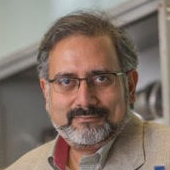
Portrait credit
Borrowed photograph of Abhay Deshpande from a public Stony Brook faculty page, used only as a layout placeholder. This photograph does not depict Alex Rivera. View original portrait source.