


Faculty
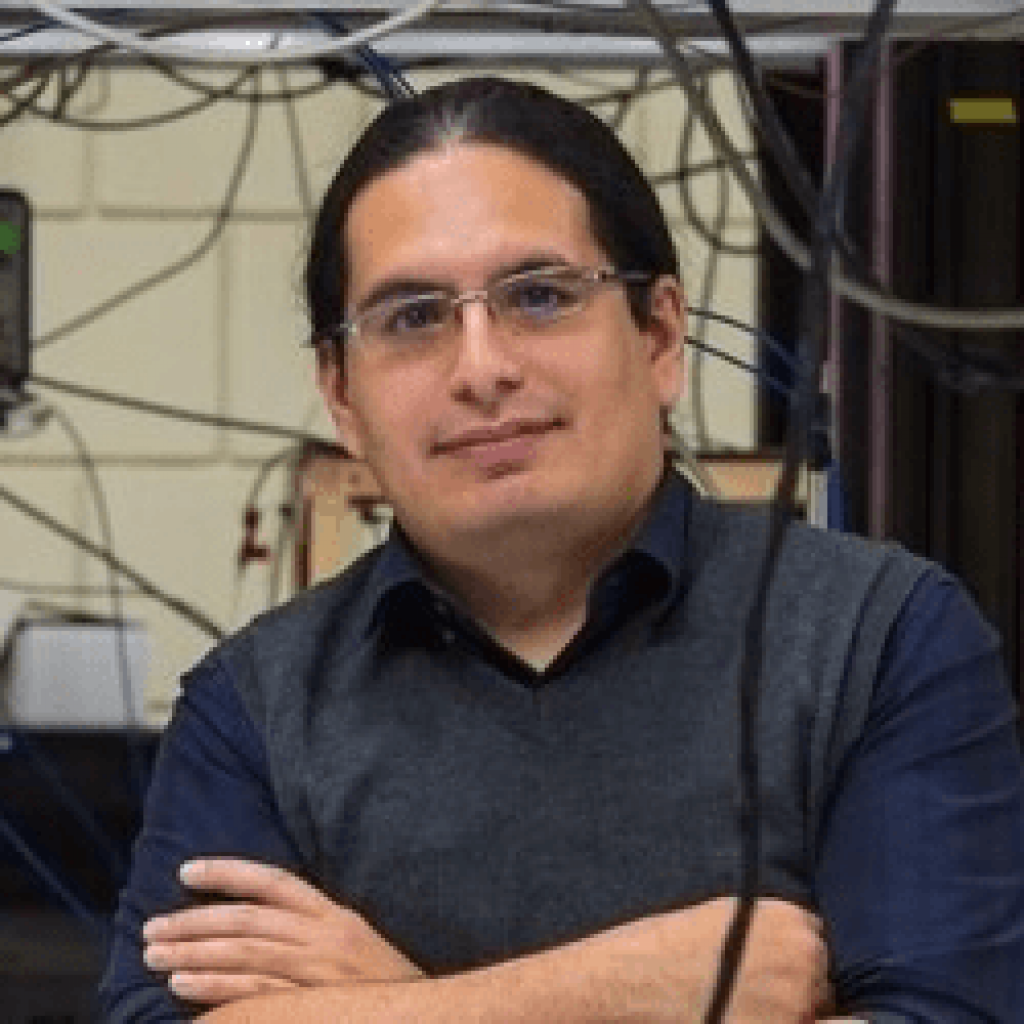
Prof. Eden Figueroa
Presidential Innovation Endowed Professor
Prof. Eden Figueroa was awarded his BSc in Engineering Physics and his MSc in Optical Engineering at Monterrey Tech, Mexico in 2000 and 2002 respectively. From 2003 to 2008, he was a PhD student in the Quantum Technology Group of Prof. A. I. Lvovsky at the University of Konstanz in Germany and later at the Institute for Quantum Information Science at the University of Calgary, Canada. His PhD thesis entitled: “A quantum memory for squeezed light” was one of the first experimental implementations of quantum memory for quantized light fields. In 2009, he joined the Quantum Dynamics Group of Prof. G. Rempe at the Max-Planck-Institut für Quantenoptik in Garching, Germany where he worked in implementation of quantum networks utilizing single-atoms trapped in high-finesse optical cavities. Starting in 2013 he has been an Professor and the Group leader of the Quantum Information Technology group at Stony Brook University, where he has developed scalable room temperature quantum memories and entanglement sources, aiming to construct the first working prototype of a quantum repeater network. Since Jan. 2019, Prof. Figueroa is also joint appointment with the Instrumentation Division and the Computer Science Initiative at Brookhaven National Laboratories. The collaboration between Stony Brook and BNL is developing the New York State Quantum Internet Testbed (NYSQIT) , a first prototype of a quantum network distributing photonic entanglement over long distances. Since Sept. 2023 Prof. Figueroa is the Director of the Stony Brook Center for Distributed Quantum Processing and a Presidential Innovation Endowed Professor.
Postdoctoral Researchers
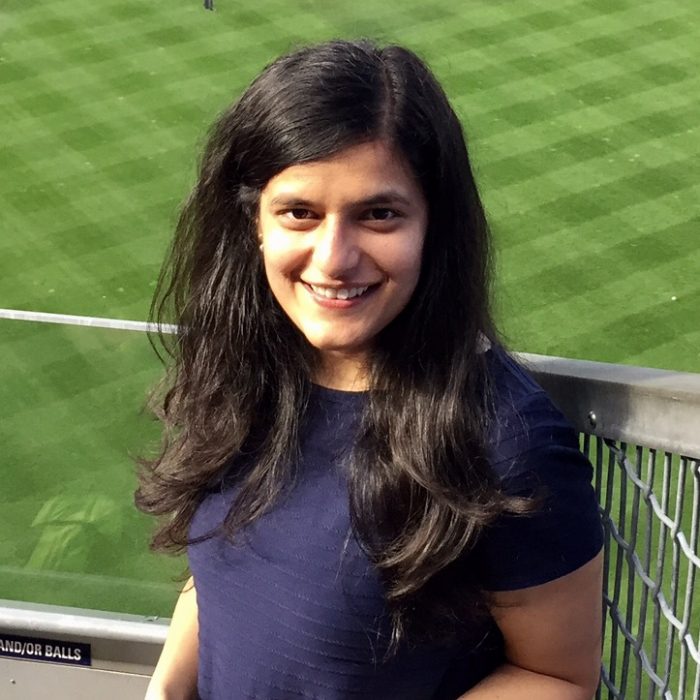
Dr. Sonali Gera
Research Statement: Hi, I am Sonali and I work on room temperature quantum devices including single photon sources and atomic quantum memories which have the potential for realizing a scalable large scale quantum repeater network. My work is focused on building sources of single photons that are based on spontaneous parametric down conversion in non-linear crystals placed inside optical cavities which help in creating down converted photons that are suitable for interaction with atomic ensembles. I have also worked with room temperature quantum memories which use an ensemble of 87Rb atoms in an Electromagnetically Induced Transparency (EIT) configuration to store polarization states of light and retrieve them on demand.
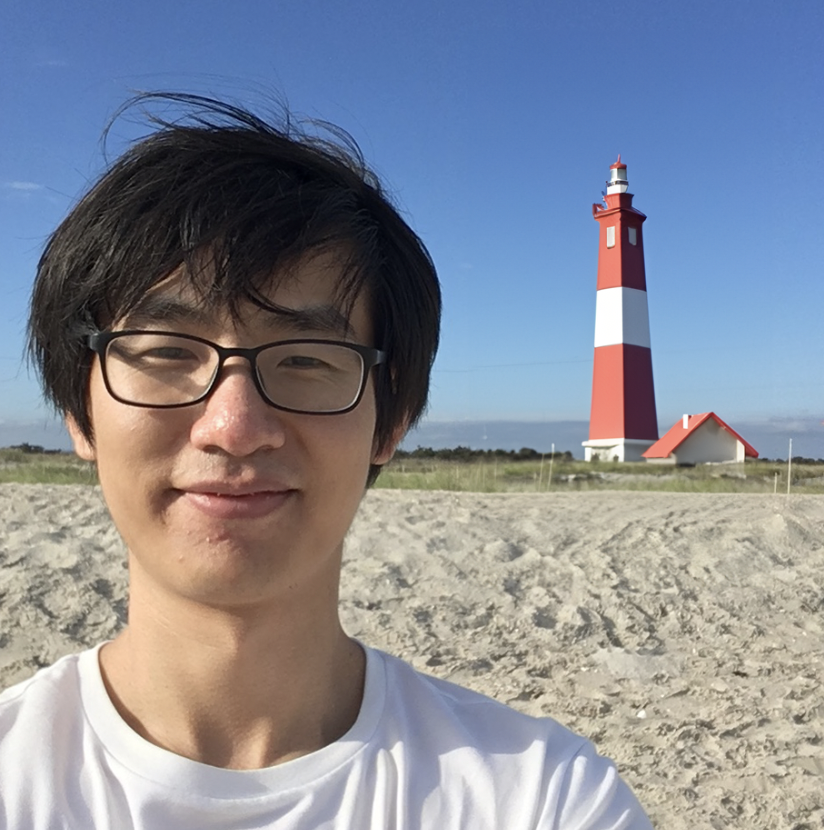
Dr. Guodong Cui
Research Statement: I am Guodong Cui, a postdoctoral associate in the cavity QED group. During my first half time here as a PhD student, I mainly worked on constructing, stabilizing and characterizing a double-cavity QED (2cQED) experimental machine and its relevant physics. This system features strong cooperative couplings between two individual Fabry-Pérot cavities and a cold atomic ensemble. Having explored the vacuum-atoms coupling in each individual cavity, as well as the vacuum-atoms-vacuum interaction in the double cavities, my current research is to invest how much cross section can one achieves between two flying photons, by harnessing the photon-atoms-photon interactions of the 2cQED with EIT. The applications for quantum information include photon-photon gate, heralding, routing, transduction, and source. I also like to automize things in Python.
Graduate Students
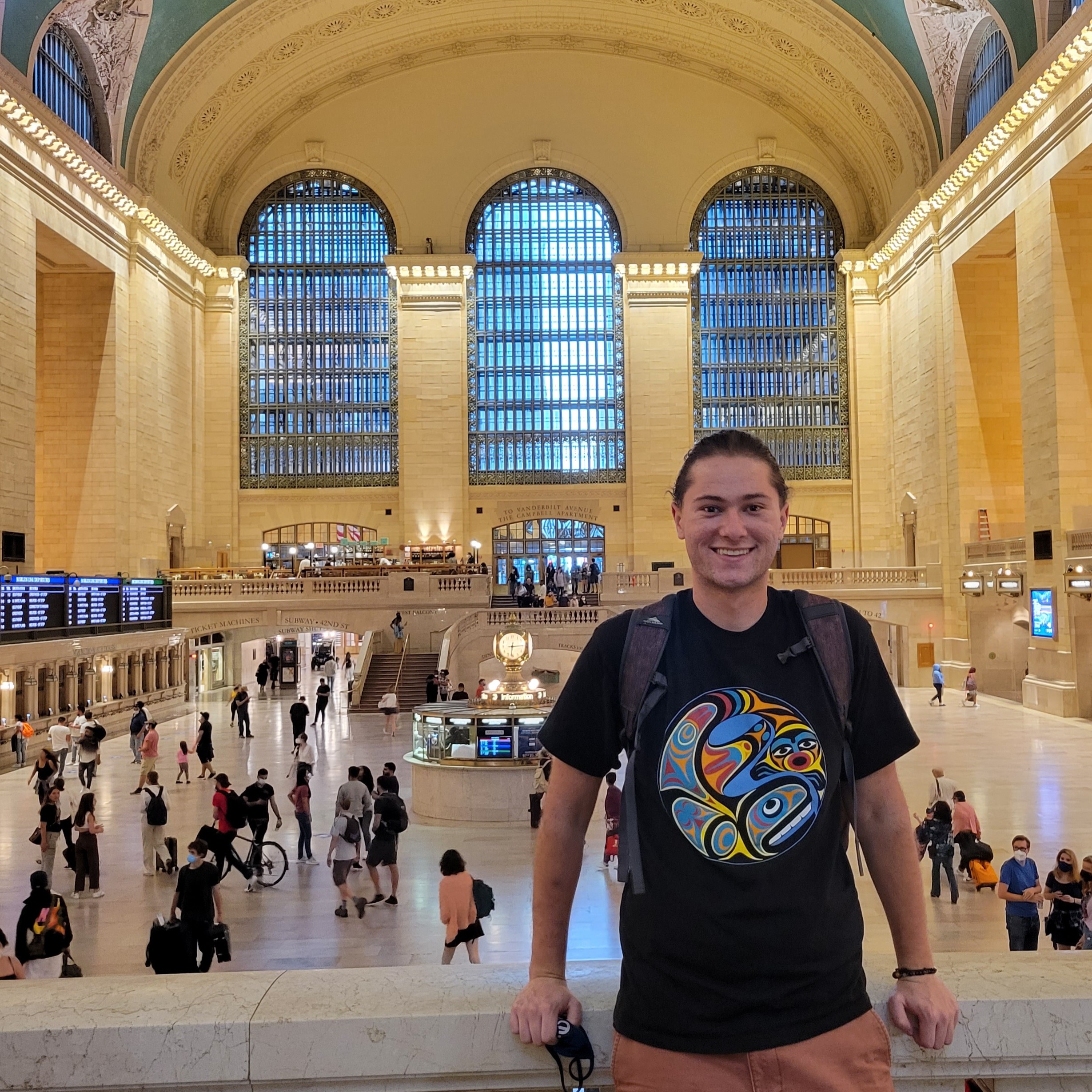
Chase Wallace
Ph.D. Student B.S. Physics (Honors), The Ohio State University, 2020 B.S. Mathematics, The Ohio State University, 2020 My research centers around advancing room-temperature atomic quantum memories for polarization qubits. I investigate the interaction between the retrieved signals from these memories to predict their efficacy within quantum repeater configurations. Additionally, my work focuses on reducing noise levels and identifying physical methods to signal the presence of single photons in the memory via system non-linearities. Furthermore, I am exploring strategies for distributing and swapping entanglement over long distances using deployed fiber optics, aiming to establish a quantum repeater system across Long Island and NYC. In addition to memory-compatible entanglement sources, this involves the development of a robust network infrastructure to guarantee the scalability and practicality of these techniques in real-world applications.
Anthony Del Valle
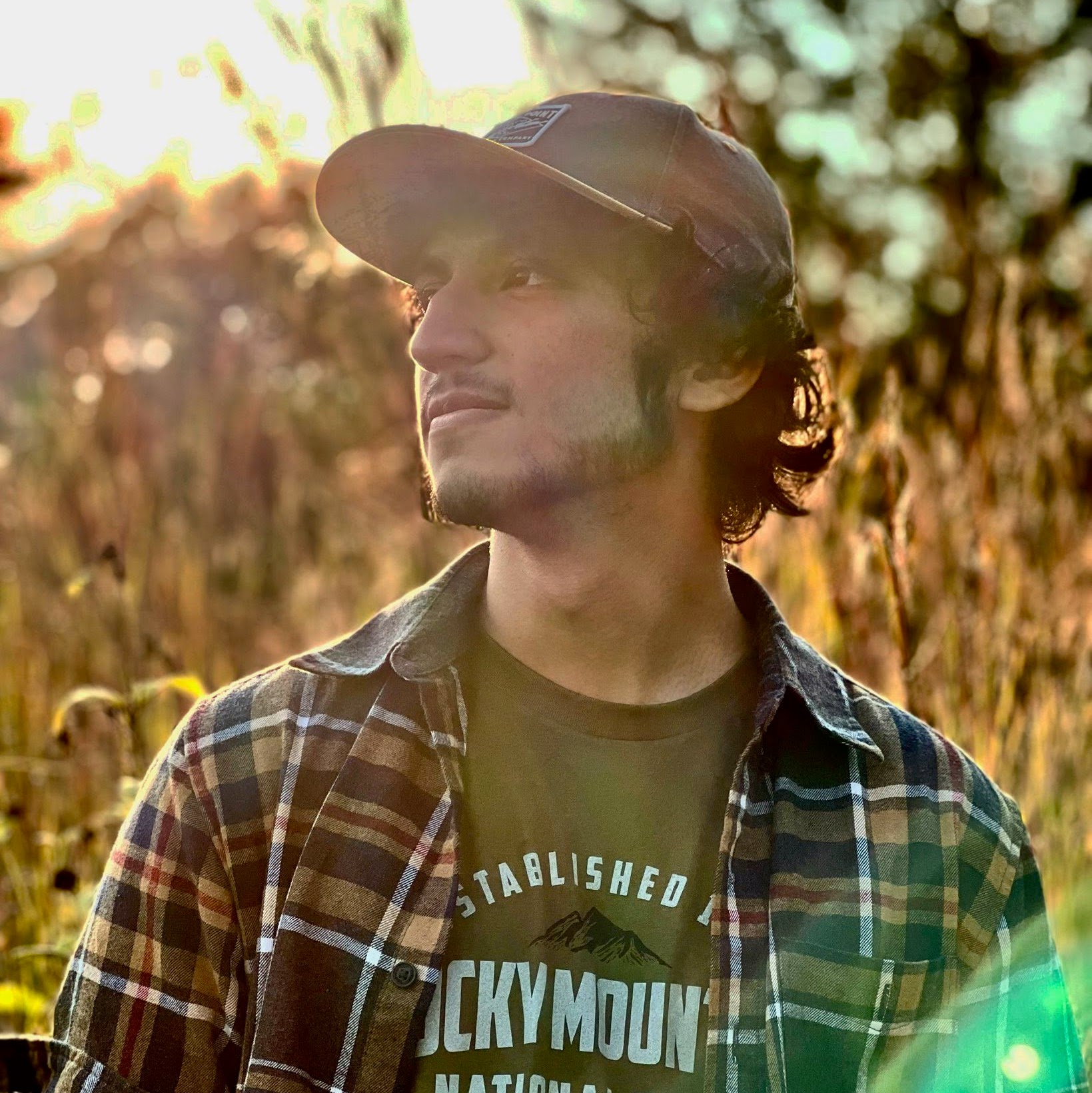
Ph.D. Student M.S.I Physics, Stony Brook University, 2025 B.S. Physics, Stony Brook University, 2022 B.S. Mathematics, Stony Brook University, 2022 My research focuses on employing warm Rubidium atoms to store polarization qubits of light using Electromagnetically Induced Transparency (EIT). I am also part of the Cavity QED team developing a photon-photon gate, as well as being involved in the long-distance quantum network testbed. My research interests involve quantum optics, atomic physics, and Cavity QED.
Leonardo Castillo-Veneros
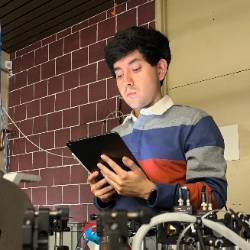
Ph.D. Student M.S.I Physics, Stony Brook University, 2024 B.S. (Ηonors) Stony Brook University, 2021 My work is focused on quantum networks. Specifically, I am developing a long-distance polarization-encoded MDI-QKD system and the methodology, like tomography methods and networking costructs, to realize long-distance quantum experiments. My interests are atomic physics, quantum optics, and ML.
Dounan Du
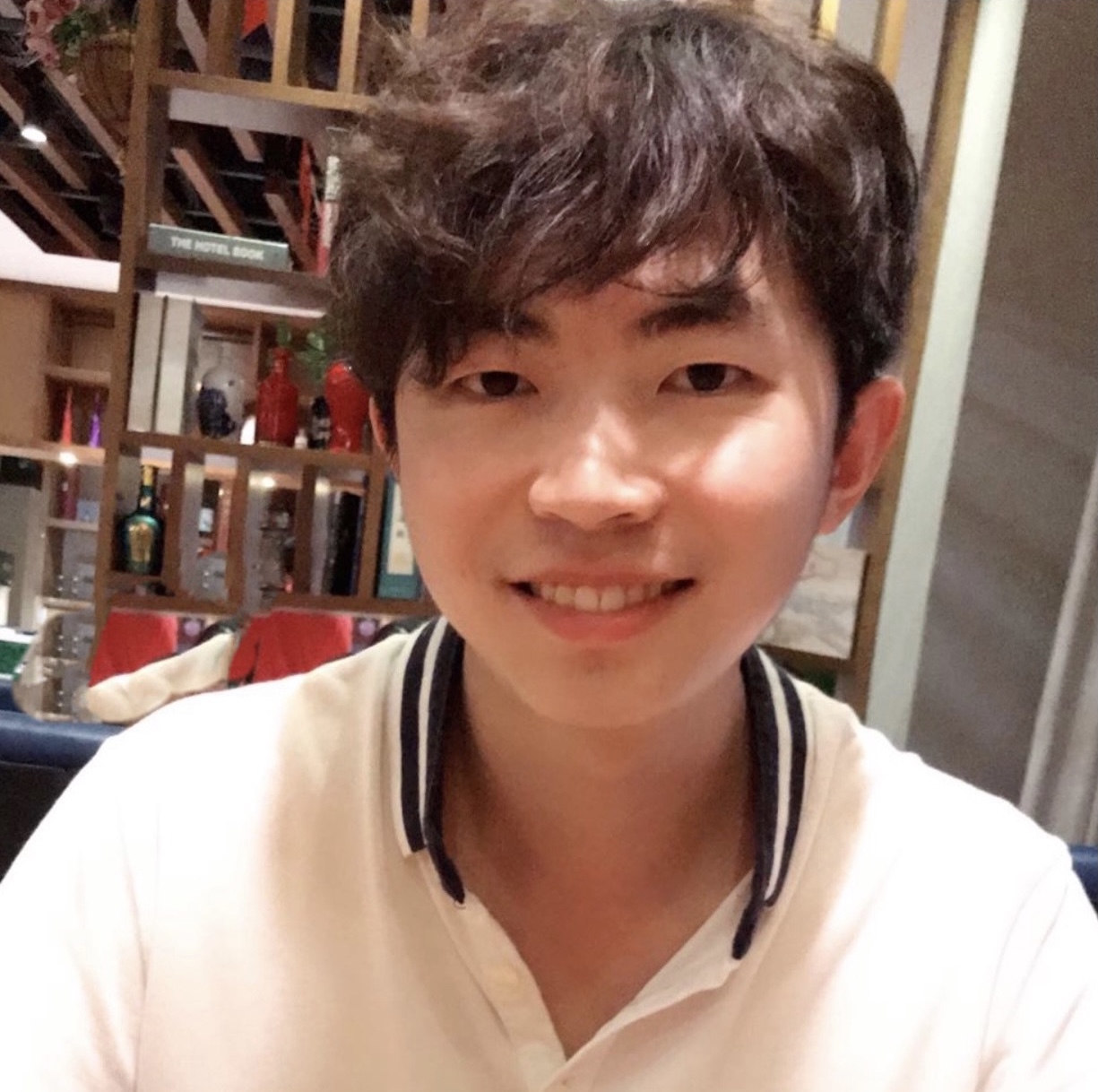
Ph.D. Student B.S. Wuhan University, 2015 M.S. University of Melbourne, 2018 M.A. Stony Brook University, 2020 I am Dounan, interested in fundamental photon-atom interactions and the engineering of photon-atom systems for quantum information applications. Currently, my research focuses on the atom-photon interfaces of the Long Island Quantum Internet testbed.
Rishikesh Gokhale
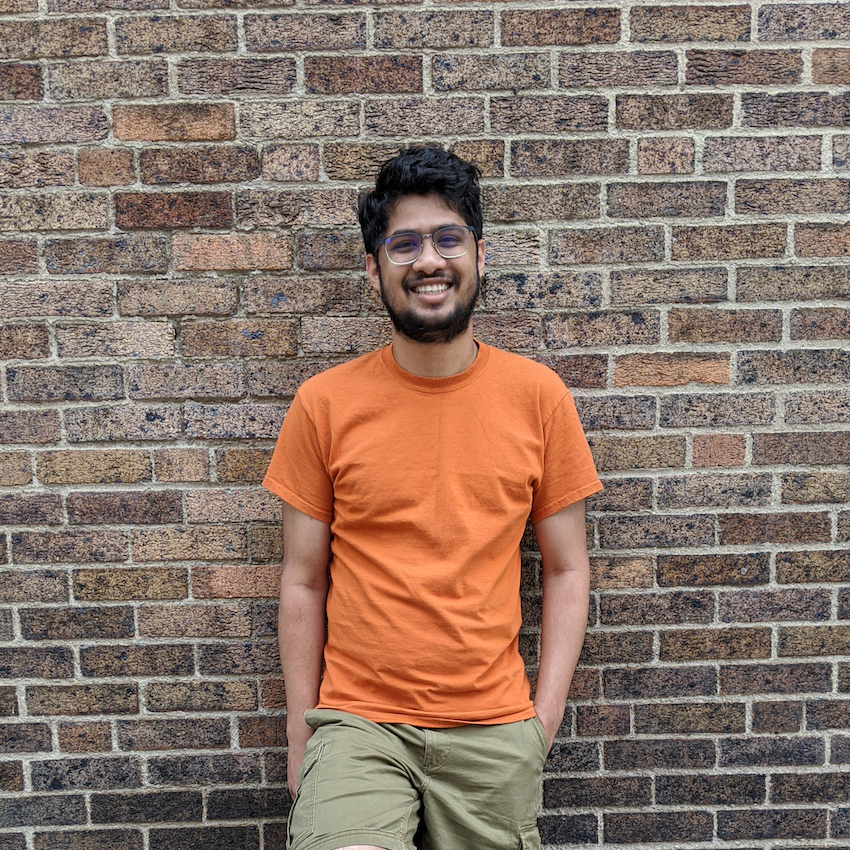
Ph.D. Student B.E., University of Mumbai, 2017 M.A., Stony Brook University, 2020 I am currently working on the development of free space hybrid quantum communication channels between Stony Brook University (SBU), Brookhaven National Laboratory (BNL), and Yale University. We recently conducted Adaptive Optics (AO) enabled Hong-Ou-Mandel experiment to test quantum interference using a free space channel in a hallway, and we are now working to extend this experiment over a longer baseline. Our goal is to establish a robust quantum network connecting SBU, BNL, and Yale using quantum memory-assisted free space channels. This research has the potential to significantly advance the field of quantum communication and networking.
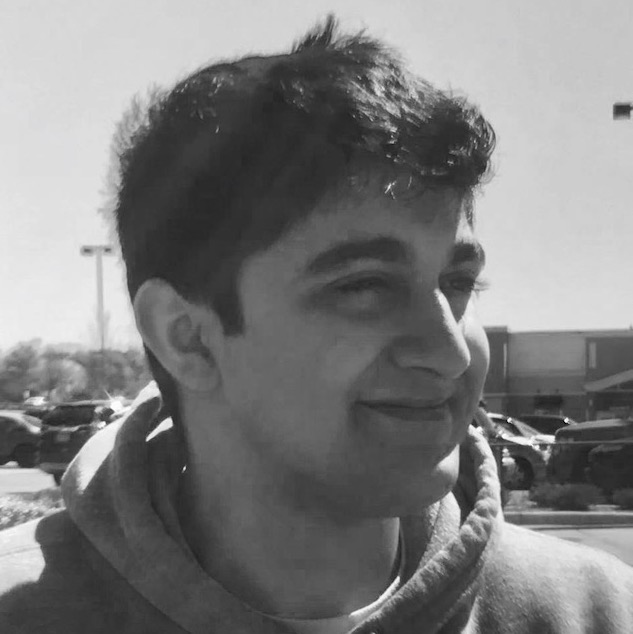
Siddharth Sehgal
Ph.D. Student B.S. (Honors) Imperial College London, 2016 M.A., Stony Brook University, 2019
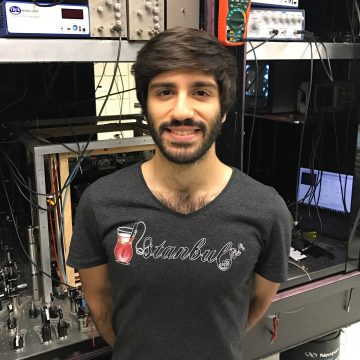
Samet Demircan
Ph.D. Student B.S., West Virginia University, 2016 M.A. Stony Brook University, 2019
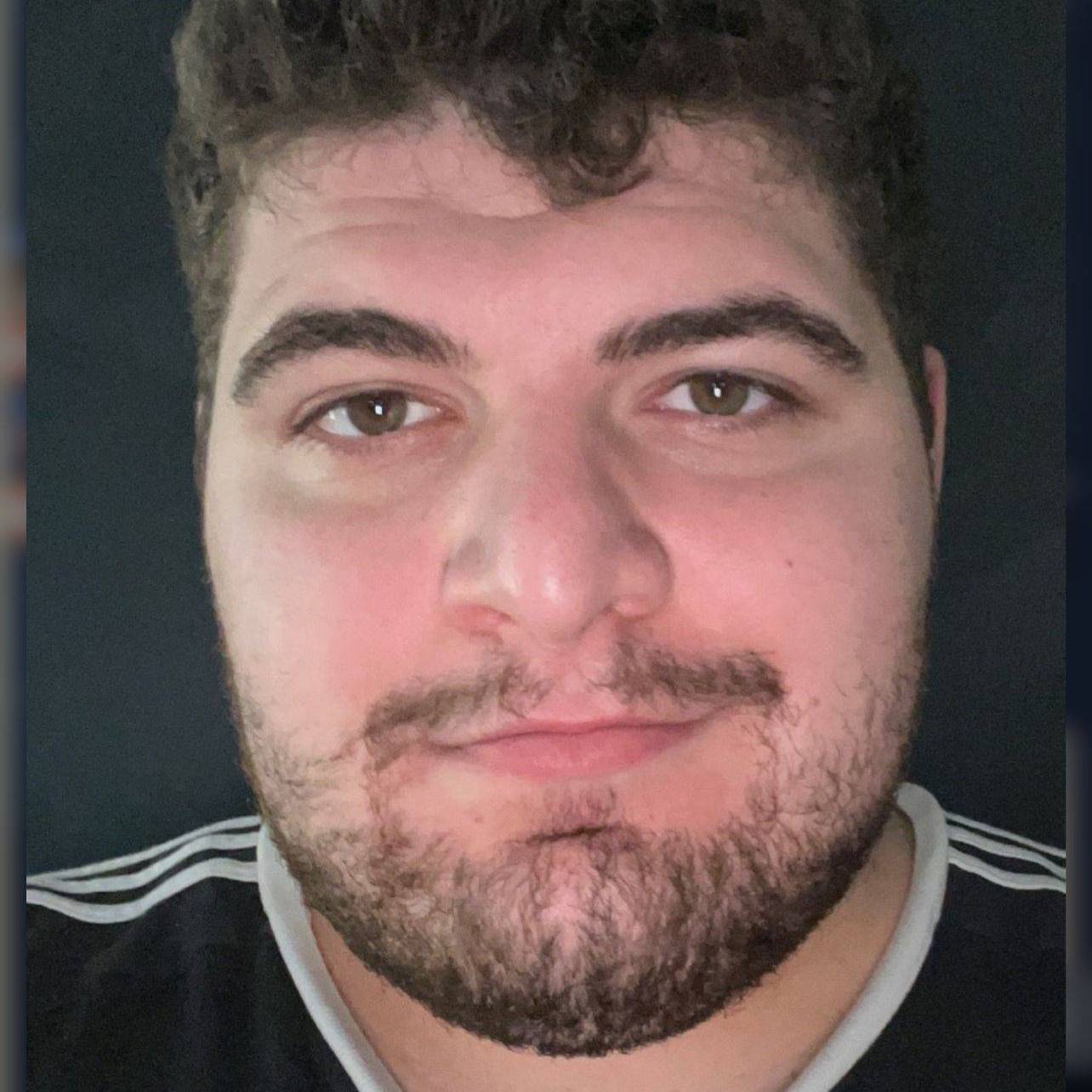
Edoardo Buonocore
Ph.D. Student B.S. University of Padua, 2020 M.S. Stony Brook University, 2024 My main research focus is on entanglement sources. I am currently working on designing and developing a cavity-enhanced source of polarization-entangled photon pairs. Specifically, the objective is to achieve a high production rate of polarization-entangled photon pairs (HH + VV Bell State) employing the non-linear process of spontaneous parametric down-conversion within two periodically poled KTP Crystals within a Bowtie Cavity.
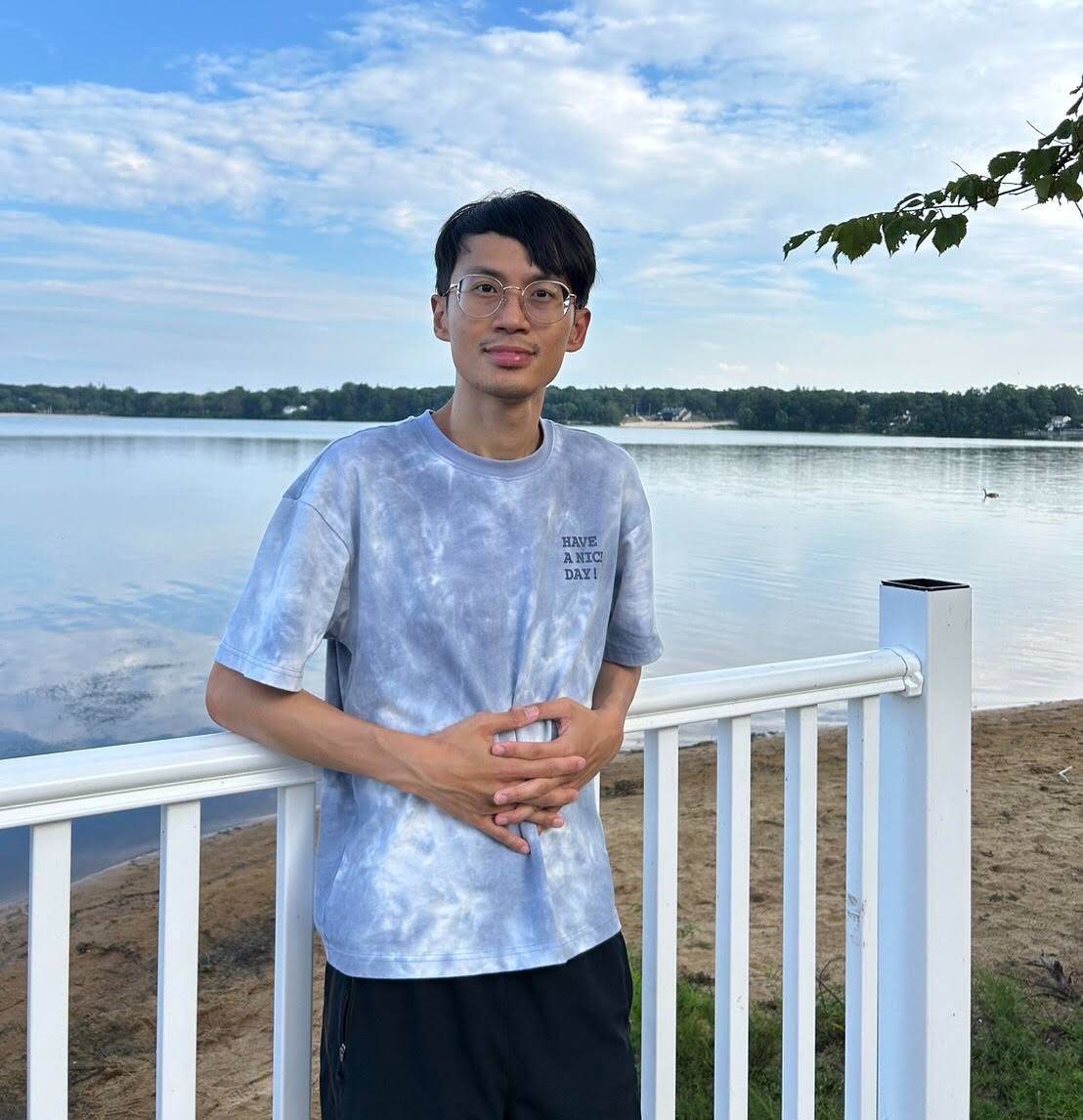
Jacky Chen
Ph.D. Student I am Jacky. I am currently working on the experiments of quantum tomography and entangled photons generation. In the previous project, I built the polarization compensation system for the quantum network.
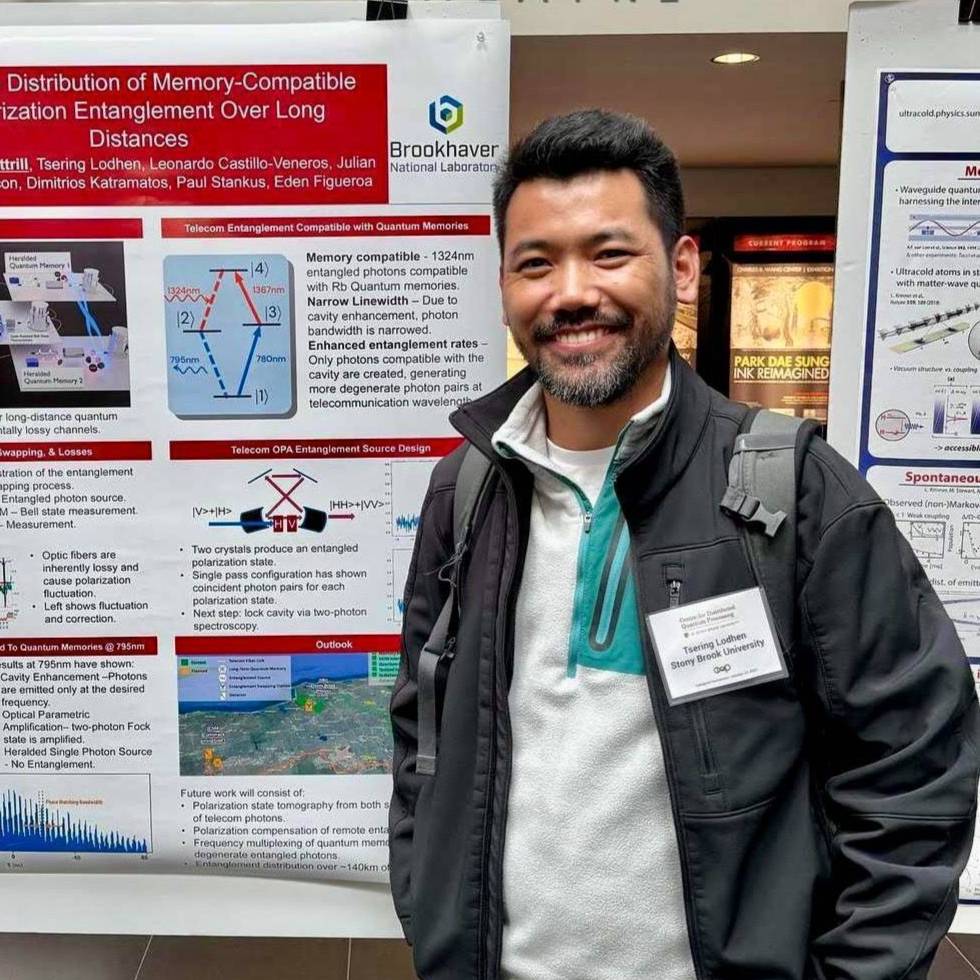
Tsering Lodhen
Ph.D. Student I am Tsering Lodhen, and my research is dedicated to developing a photon entanglement source at telecom wavelengths using a non-linear process with a KTP crystal, as well as an entanglement swapping station for long-distance quantum networks. Currently, I am working on generating single-pass entangled photons using two orthogonally arranged ppKTP crystals and analyzing these photons through quantum state tomography. Additionally, we are constructing a rack-mounted, cavity-enhanced entangled photon source, which is essential for quantum network repeaters.