Chaste Tree (Vitex agnus-castus)

"Fragrant lavender flower spikes and silvery foliage bring color, fragrance, and pollinators to the summer landscape."

Take a Moment: Visit during midsummer and listen for the steady hum of bees and butterflies among the fragrant purple flower spikes. Gently rub a leaf between your fingers to release its pleasant herbal fragrance.

Why We Love This Tree

Chaste Tree fills the landscape with color long after many flowering trees have finished blooming. Its graceful form, aromatic foliage, and abundant blossoms create a vibrant display that lasts well into summer.

Its long flowering season reminds us that nature continues to surprise us long after spring has passed.
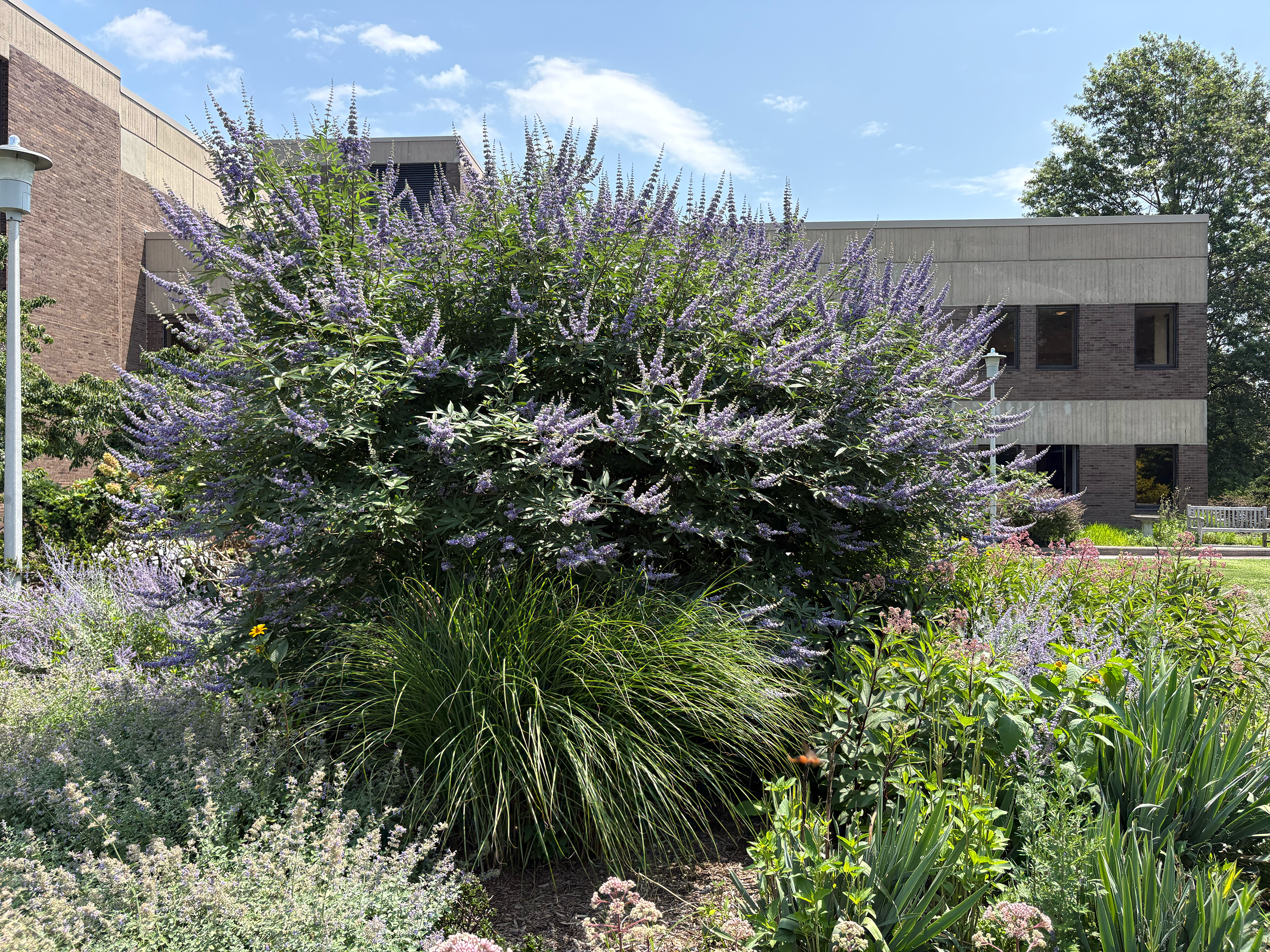


Chaste Tree in summer

Chaste Tree in Summer


Meet the Tree

Native to the Mediterranean region and western Asia, Chaste Tree is a small deciduous tree or large shrub valued for its long-lasting lavender-blue flower spikes and attractive gray-green foliage. It has been cultivated for centuries as both an ornamental and medicinal plant.

Its manageable size and exceptional drought tolerance make it well suited to gardens, campuses, and sunny landscapes.

Ecological Benefits

Chaste Tree is an outstanding pollinator plant. Its nectar-rich flowers attract bees, butterflies, hummingbirds, and other beneficial insects throughout the summer, helping support healthy pollinator populations when relatively few trees are in bloom.

Did You Know?


Chaste Tree flowers during the heat of summer, providing an important source of nectar for pollinators at a time when many spring-flowering trees have already finished blooming.

Quick Facts

Native: Mediterranean Region & Western Asia

Type: Deciduous Tree

Size: 10 to 20 ft tall × 10 to 20 ft wide

Sun: Full Sun

Water: Low to Moderate

Growth Rate: Fast

Flowers: Lavender-blue flower spikes in summer

Fall Color: Yellow


Botanical Profile

Family: Lamiaceae

Common Names: Chaste Tree

Genus Meaning: Vitex is the ancient Latin name for this group of plants.

Species Meaning: agnus-castus comes from Greek and Latin words associated with purity and chastity, reflecting the plant's historical use.


How to Recognize It

Look for these distinctive characteristics:

  • Upright spikes of lavender-blue flowers
  • Aromatic gray-green compound leaves
  • Rounded, vase-shaped form
  • Smooth gray bark
  • Small dark berries after flowering
  • Long summer bloom period

Growing Conditions

Light: Full sun

Soil: Well-drained soil

Moisture: Low to moderate

Hardiness: USDA Zones 6 to 9

Tolerance: Heat, drought, poor soils, and coastal conditions