Pin Oak (Quercus palustris)

"Graceful branching and brilliant scarlet autumn foliage make Pin Oak one of America's most admired native oaks."

Take a Moment: Notice the tree's distinctive branching pattern, with lower branches gently sweeping downward, middle branches extending outward, and upper branches reaching toward the sky. In autumn, admire the brilliant crimson leaves that often remain on the tree well into winter.

Why We Love This Tree

Pin Oak combines stately form with spectacular seasonal color. Its symmetrical crown and dependable fall display have made it one of the most widely planted native shade trees in North America.

Its steady growth reminds us that lasting beauty is built one season at a time.
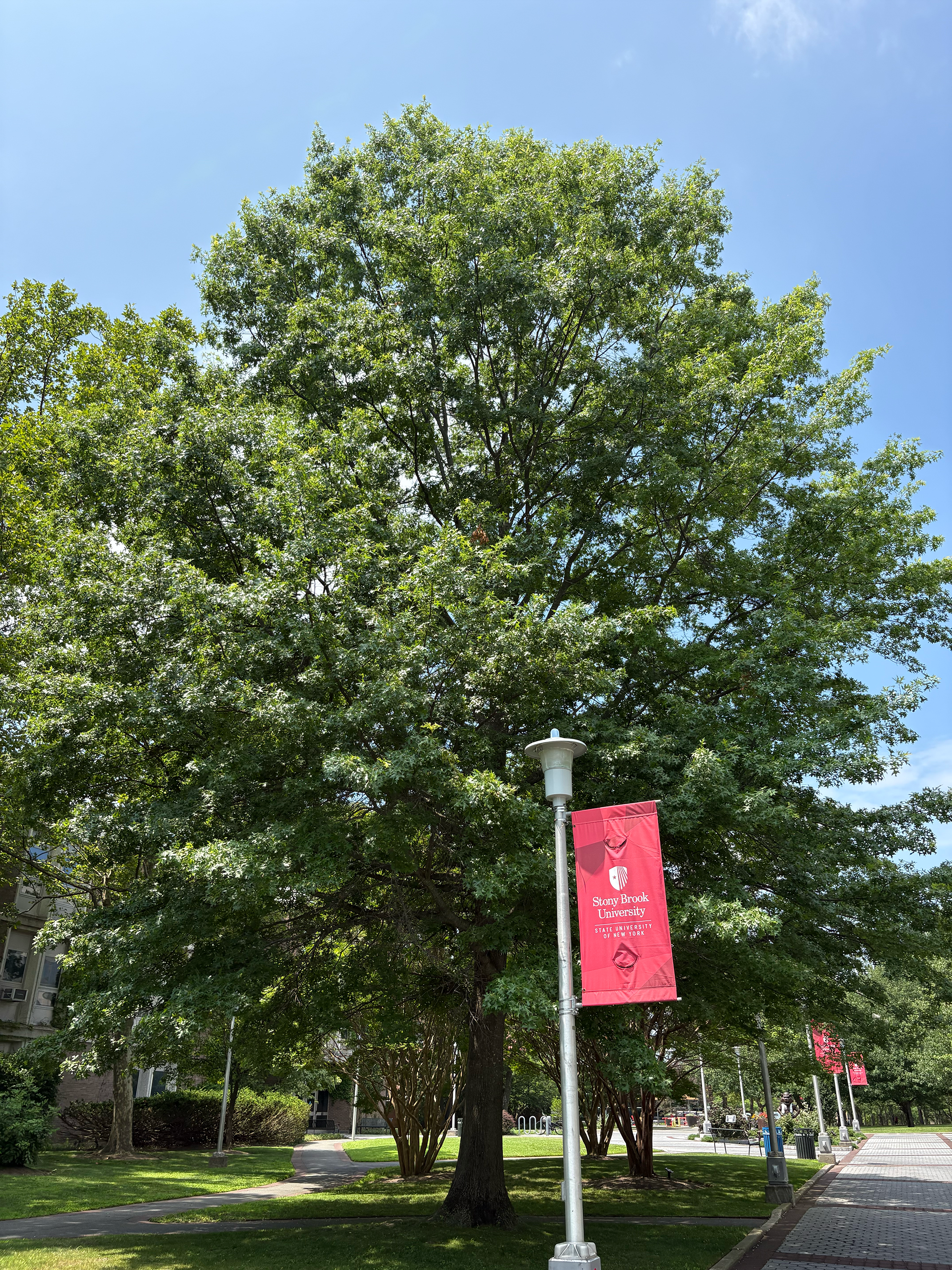


Pin Oak in summer

Pin Oak in Summer


Meet the Tree

Native to the floodplains and bottomlands of the eastern United States, Pin Oak naturally thrives in moist soils. Its distinctive branching habit and strong central trunk create one of the most recognizable silhouettes among North American oaks.

Although it belongs to the red oak group, Pin Oak is especially valued for its fast growth, uniform shape, and outstanding scarlet fall foliage.

Ecological Benefits

Like all native oaks, Pin Oak is a cornerstone of forest ecosystems. It supports hundreds of species of butterflies and moths, while its acorns provide an important food source for birds, deer, squirrels, wild turkeys, and many other wildlife species. Its large canopy also captures carbon, cools the landscape, and improves air quality.

Did You Know?


Native oaks support more caterpillar species than almost any other group of trees in North America, making them one of the most important food sources for songbirds and other wildlife. Pin Oak is an excellent example of this remarkable ecological role.

Quick Facts

Native: Eastern United States

Type: Deciduous Tree

Size: 60 to 70 ft tall × 25 to 40 ft wide

Sun: Full Sun

Water: Moderate to High

Growth Rate: Medium to Fast

Fruit: Acorns

Fall Color: Scarlet to bronze


Botanical Profile

Family: Fagaceae

Common Names: Pin Oak

Genus Meaning: Quercus is the classical Latin name for oak trees.

Species Meaning: palustris means "of marshes," referring to its preference for moist soils.


How to Recognize It

Look for these distinctive characteristics:

  • Deeply lobed leaves with pointed tips
  • Distinctive tiered branching habit
  • Small rounded acorns
  • Straight central trunk
  • Smooth gray bark that becomes ridged with age
  • Brilliant scarlet fall foliage

Growing Conditions

Light: Full sun

Soil: Moist, acidic, well-drained soil

Moisture: Moderate to high

Hardiness: USDA Zones 4 to 8

Tolerance: Wet soils and urban conditions