Chestnut Oak (Quercus montana)

"Rugged bark, distinctive leaves, and remarkable resilience make Chestnut Oak a symbol of strength in rocky landscapes."

Take a Moment: Run your eyes along the deeply ridged bark, one of the most textured among North American oaks. Then notice the broad leaves with rounded teeth that resemble those of the American Chestnut.

Why We Love This Tree

Chestnut Oak thrives where many trees struggle, anchoring rocky hillsides and dry ridges with quiet determination. Its rugged appearance and dependable nature make it a lasting symbol of resilience.

Its ability to flourish in challenging conditions reminds us that perseverance often produces enduring strength.
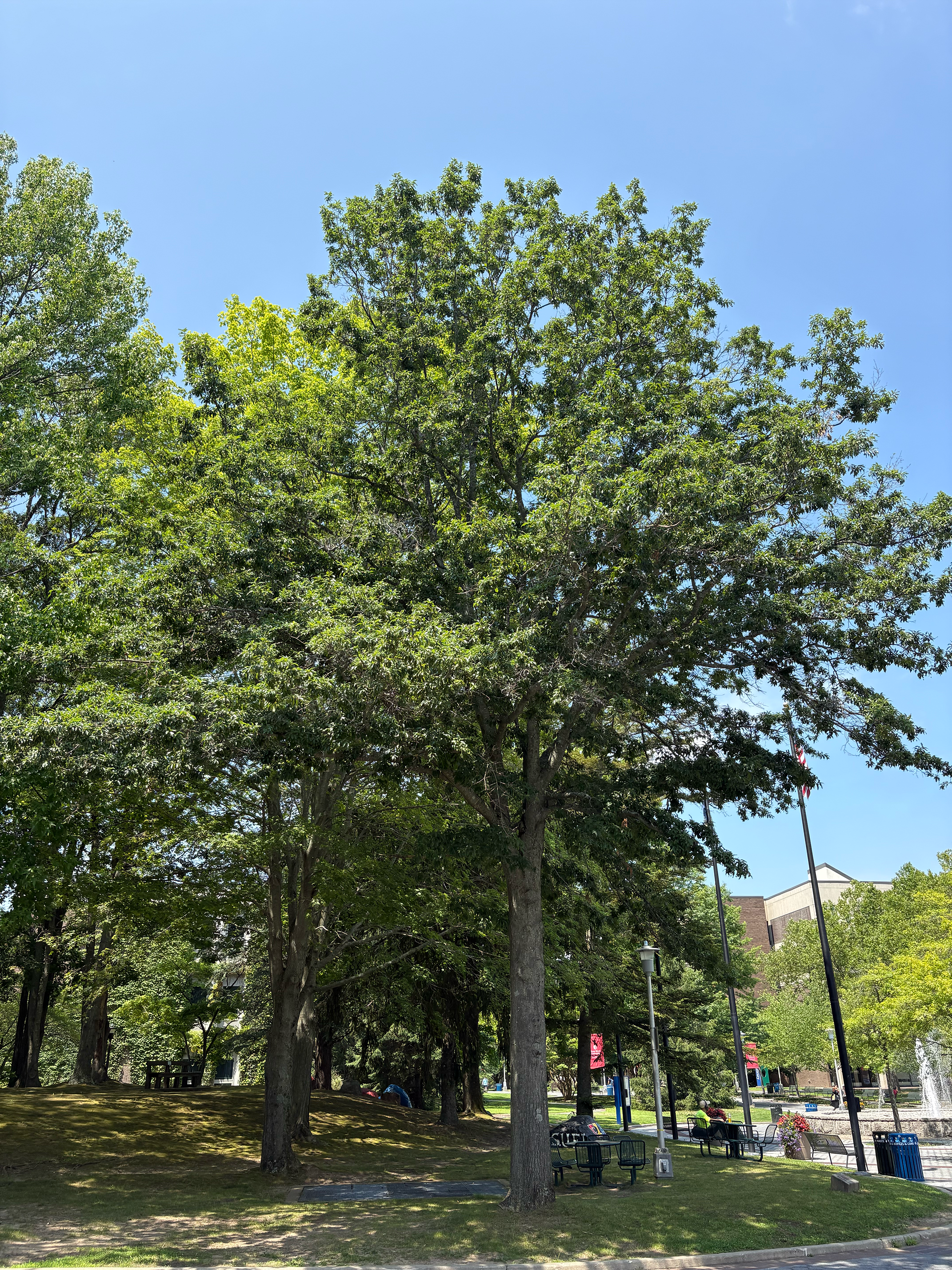


Chestbut oak in summer

Chestnut Oak in Summer


Meet the Tree

Native to the eastern United States, Chestnut Oak is commonly found on rocky slopes, ridges, and well-drained upland forests. It is named for its leaves, which resemble those of the American Chestnut rather than the deeply lobed leaves typical of many oaks.

Its thick bark and strong wood help it withstand harsh growing conditions, allowing mature trees to live for centuries.

Ecological Benefits

Chestnut Oak is one of the most valuable native trees for wildlife. Its large acorns provide an important food source for deer, wild turkeys, black bears, squirrels, and many songbirds. Like other native oaks, it supports hundreds of species of butterflies and moths, making it an essential part of healthy forest ecosystems.

Did You Know?


Chestnut Oak produces some of the largest acorns of any eastern oak, making it an especially valuable food source for wildlife.

Quick Facts

Native: Eastern United States

Type: Deciduous Tree

Size: 50 to 70 ft tall × 40 to 60 ft wide

Sun: Full Sun to Partial Shade

Water: Moderate

Growth Rate: Slow

Fruit: Large acorns

Fall Color: Yellow to bronze


Botanical Profile

Family: Fagaceae

Common Names: Chestnut Oak, Rock Oak

Genus Meaning: Quercus is the classical Latin name for oak trees.

Species Meaning: montana means "of the mountains," referring to its native habitat.


How to Recognize It

Look for these distinctive characteristics:

  • Long leaves with rounded, chestnut-like teeth
  • Thick, deeply furrowed bark
  • Large rounded acorns
  • Broad, rounded crown
  • Strong trunk
  • Yellow-bronze fall foliage

Growing Conditions

Light: Full sun to partial shade

Soil: Well-drained, rocky or sandy soil

Moisture: Moderate

Hardiness: USDA Zones 4 to 8

Tolerance: Drought, rocky soils, and dry upland sites