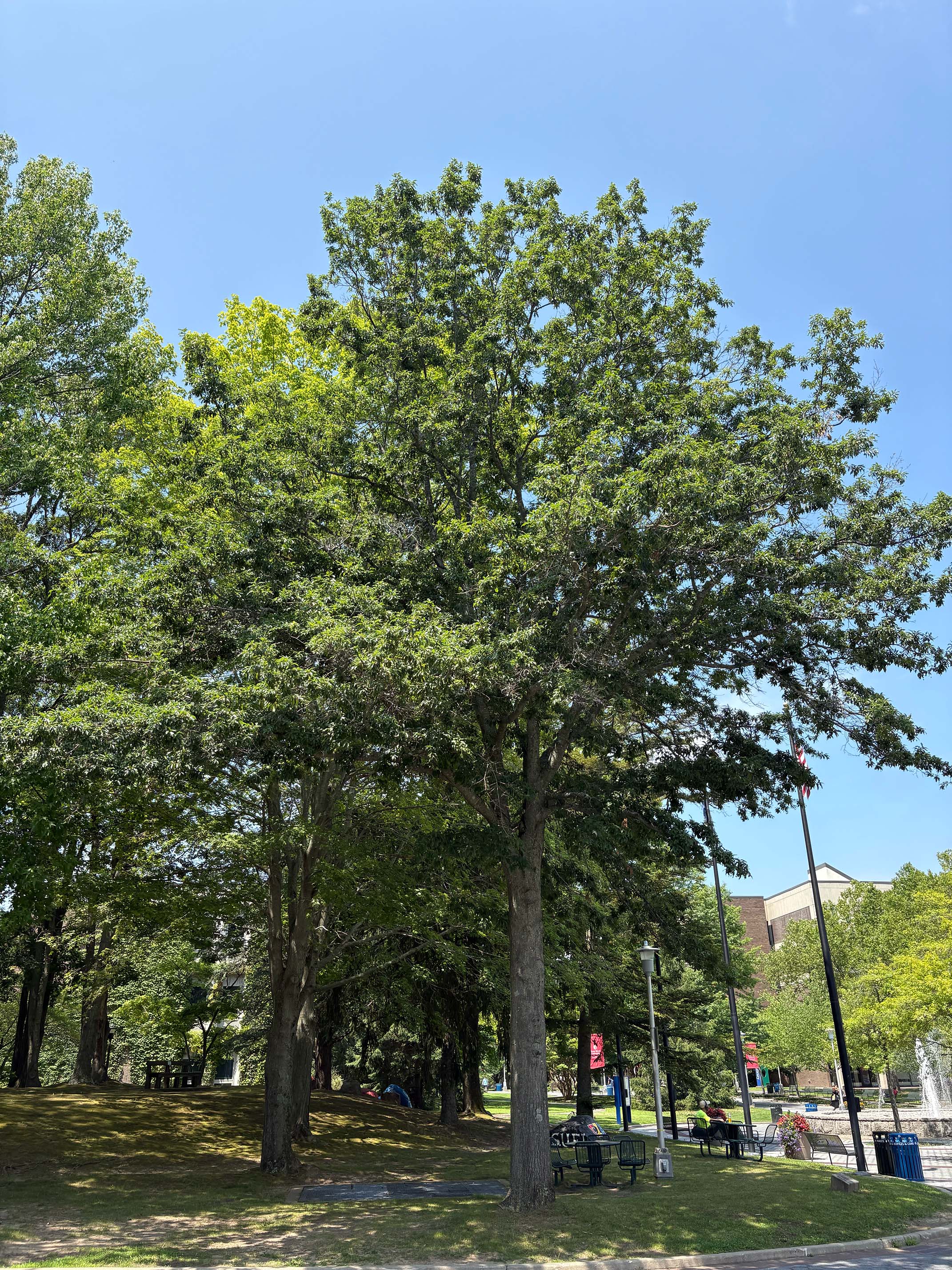
Meet the Tree
Native to the central and eastern United States, Shingle Oak is a member of the red
oak group and is most commonly found in woodlands, bottomlands, and along streams.
Unlike most oak species, Shingle Oak has smooth-edged, unlobed leaves that can easily
be mistaken for those of other hardwood trees. Its common name comes from the historical
use of its wood to make shingles by early settlers.
As it matures, Shingle Oak develops a broad, rounded crown that provides generous
shade. Its leaves often remain on the branches well into winter, a characteristic
known as marcescence.
Ecological Benefits
Shingle Oak provides valuable food and habitat for native wildlife. Its acorns are
eaten by squirrels, deer, wild turkeys, and other birds and mammals.
Like other native oaks, it serves as a host plant for numerous species of butterflies
and moths, supporting local food webs and biodiversity. Its dense canopy also offers
shelter and nesting opportunities for birds.
Quick Facts
Native: Central and Eastern United States
Type: Deciduous Tree
Size: 40 to 60 ft tall × 40 to 60 ft wide
Sun: Full Sun to Partial Shade
Water: Moderate
Growth Rate: Moderate
Fruit: Small acorns that mature in two growing seasons
Fall Color: Yellow-brown to reddish-brown
Botanical Profile
Family: Fagaceae
Common Names: Shingle Oak, Laurel Oak
Genus Meaning: Quercus is the classical Latin name for oak trees.
Species Meaning: imbricaria refers to overlapping roof tiles or shingles, a reference to the historical use of
its wood for roofing.
How to Recognize It
Look for these distinctive characteristics:
- Smooth-edged, unlobed, oblong leaves
- Dark green, glossy summer foliage
- Gray-brown bark that develops shallow furrows with age
- Small, rounded acorns with shallow caps
- Broad, rounded crown
- Leaves that may remain attached through winter
Growing Conditions
Light: Full sun to partial shade
Soil: Well-drained, moist, slightly acidic to neutral soils; adaptable to a range of soil
types
Moisture: Moderate
Hardiness: USDA Zones 5 to 8
Tolerance: Urban conditions, occasional drought once established, and a range of soil conditions