London Planetree (Platanus × acerifolia)

"Distinctive camouflage-like bark and an expansive canopy have made London Planetree one of the world's most successful urban trees."

Take a Moment: Look closely at the trunk and notice the mottled bark peeling away in patches of cream, olive, gray, and tan. Raise your eyes to the broad canopy, where large leaves create cool shade on even the warmest summer days.

Why We Love This Tree

London Planetree combines beauty with remarkable resilience. Its broad canopy provides generous shade, while its colorful bark creates year-round visual interest, even after the leaves have fallen.

Its adaptability demonstrates how trees can thrive alongside people while making cities healthier and more beautiful.
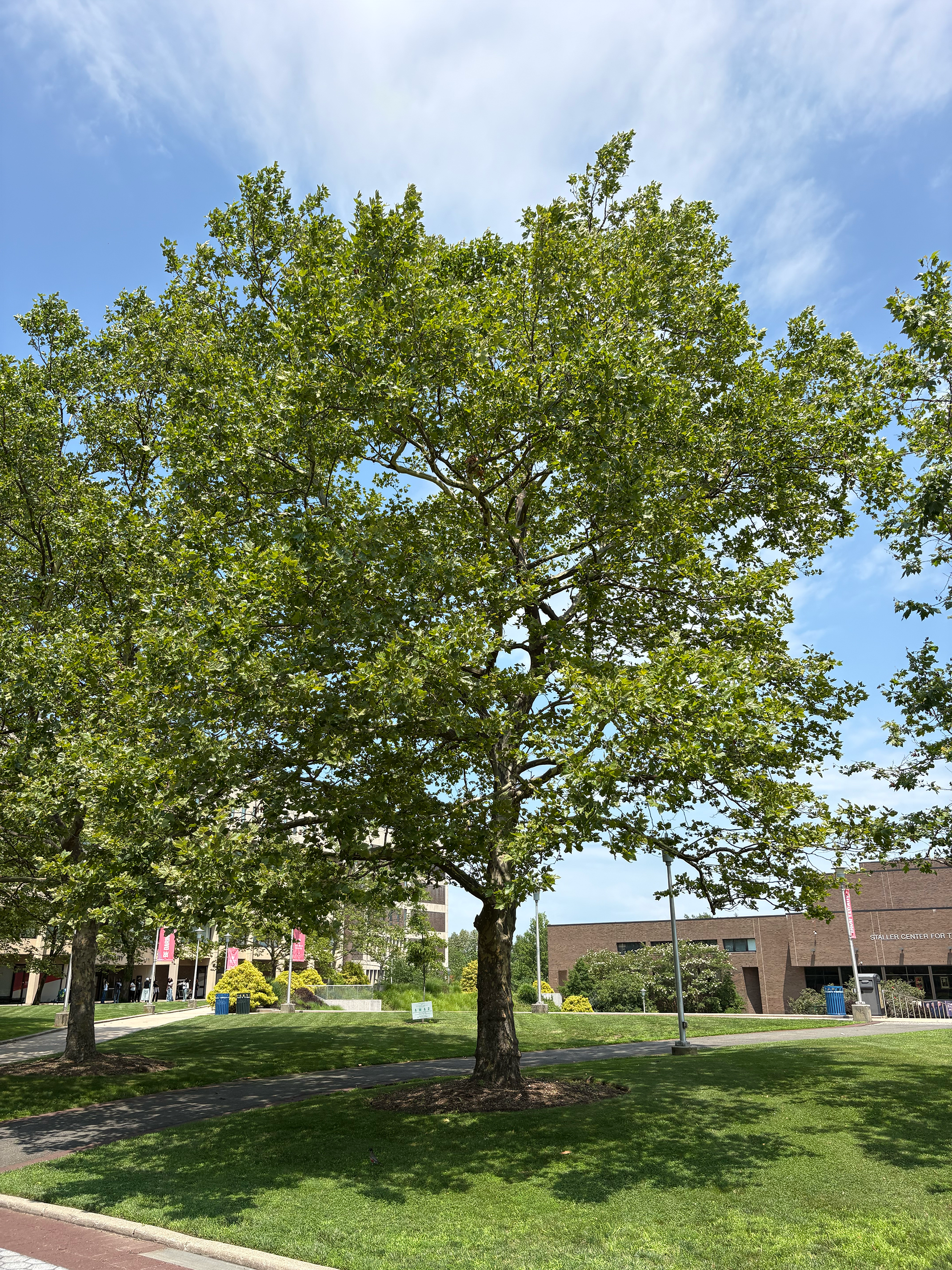


london planetree in summer

London Planetree in Summer


Meet the Tree

London Planetree is a naturally occurring hybrid between the American Sycamore (Platanus occidentalis) and the Oriental Planetree (Platanus orientalis). First recognized in Europe during the 17th century, it quickly became one of the world's most widely planted street trees because of its ability to tolerate pollution, compacted soils, and challenging urban environments.

Its massive size, broad canopy, and striking bark have made it a favorite for parks, campuses, and city streets around the globe.

Ecological Benefits

London Planetree provides extensive shade that helps reduce urban heat while improving air quality and intercepting stormwater. Its large canopy offers habitat for birds and beneficial insects, making it an important contributor to healthy urban ecosystems.

Did You Know?


The peeling bark helps London Planetree shed pollutants that accumulate on its trunk, one reason it became such a successful city tree during the Industrial Revolution.

Quick Facts

Native: Hybrid of European cultivation

Type: Deciduous Tree

Size: 70 to 100 ft tall × 60 to 80 ft wide

Sun: Full Sun

Water: Moderate

Growth Rate: Fast

Fruit: Round seed balls that persist through winter

Fall Color: Yellow-brown


Botanical Profile

Family: Platanaceae

Common Names: London Planetree

Genus Meaning: Platanus comes from the Greek word platys, meaning "broad," referring to the large leaves.

Species Meaning: × acerifolia means "maple-leaved," describing the shape of its foliage.


How to Recognize It

Look for these distinctive characteristics:

  • Peeling, mottled bark
  • Large maple-like leaves
  • Broad spreading canopy
  • Round seed balls hanging on long stems
  • Massive trunk
  • Strong horizontal branching

Growing Conditions

Light: Full sun

Soil: Adaptable to most soils

Moisture: Moderate

Hardiness: USDA Zones 5 to 9

Tolerance: Pollution, drought, compacted soil, and urban conditions