Norway Spruce (Picea abies)

"Graceful, sweeping branches and towering stature make Norway Spruce one of the most recognizable evergreens in the world."

Take a Moment: Stand beneath the canopy and look toward the branch tips, where the graceful limbs gently sweep downward. Listen to the soft rustle of the needles in the breeze and notice the long cones hanging from the branches, a signature feature of this majestic spruce.

Why We Love This Tree

Norway Spruce brings year-round beauty and a sense of permanence to the landscape. Its elegant form, dense evergreen canopy, and impressive size make it a favorite specimen tree in parks, campuses, and gardens.

Its enduring presence reminds us that some of nature's greatest landmarks continue to grow for generations.
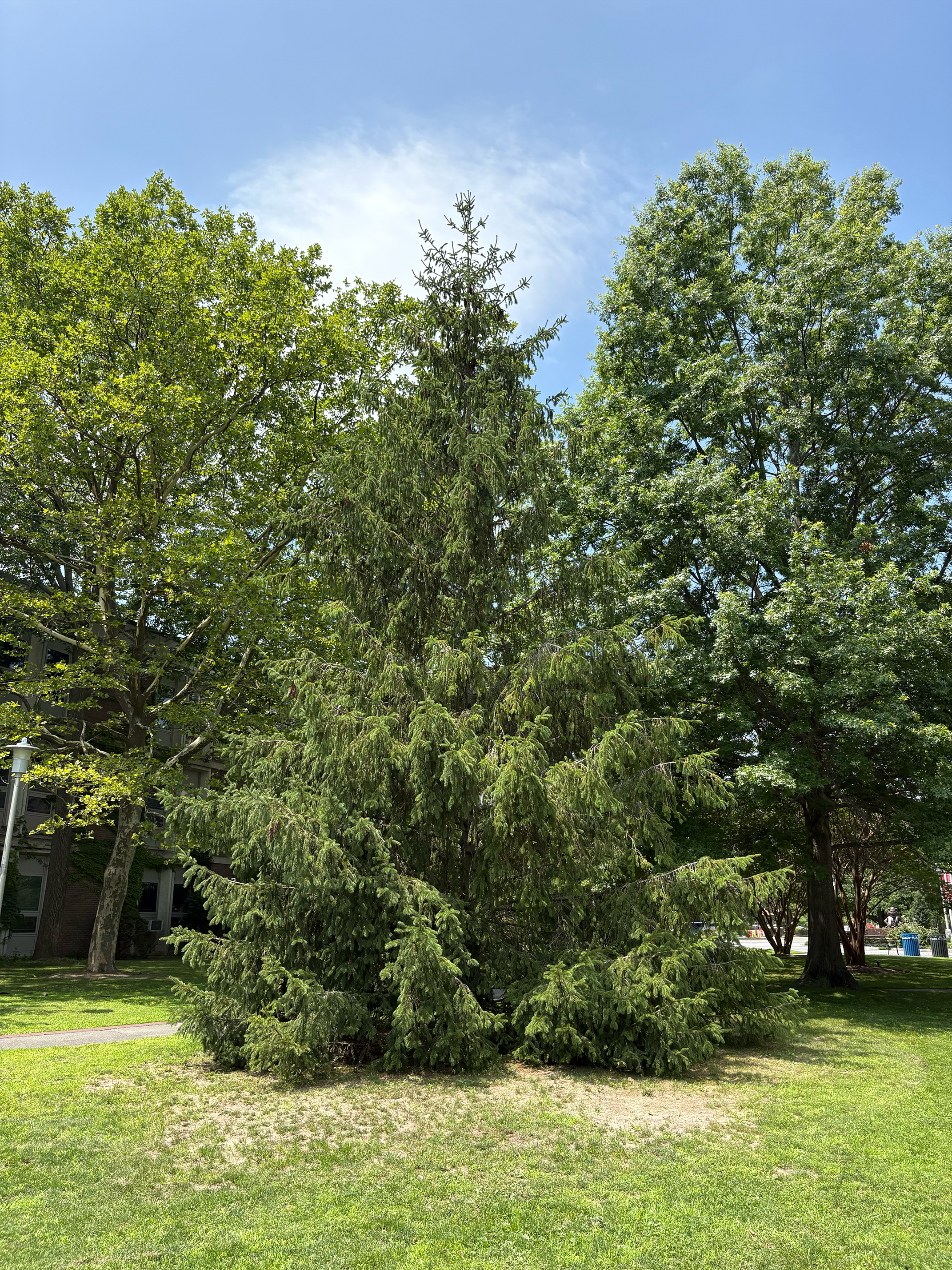


Norway Spruce in summer

Norway Spruce in Summer


Meet the Tree

Native to northern and central Europe, Norway Spruce is one of the world's most widely planted evergreen trees. It grows rapidly into a tall pyramidal tree with sweeping branches that become increasingly graceful as it matures.

Its long, pendulous cones distinguish it from most other spruces, while its adaptability and fast growth have made it a popular choice for windbreaks, reforestation projects, and ornamental landscapes. It is also widely recognized as one of the traditional Christmas tree species.

Ecological Benefits

Norway Spruce provides year-round shelter and nesting habitat for birds, squirrels, and other small mammals. Its dense evergreen canopy offers valuable winter protection while helping improve air quality, capture carbon, and reduce wind.

Did You Know?


Norway Spruce can live for several hundred years, and some clonal root systems in Sweden are believed to be among the oldest living trees on Earth.

Quick Facts

Native: Northern & Central Europe

Type: Evergreen Conifer

Size: 60 to 100 ft tall × 25 to 40 ft wide

Sun: Full Sun

Water: Moderate

Growth Rate: Fast

Cones: Long hanging cones that mature in fall

Fall Color: Evergreen


Botanical Profile

Family: Pinaceae

Common Names: Norway Spruce

Genus Meaning: Picea is the classical Latin name for spruce trees.

Species Meaning: abies is an ancient Latin name traditionally associated with fir and spruce trees.


How to Recognize It

Look for these distinctive characteristics:

  • Long, pendulous seed cones
  • Dark green, four-sided needles
  • Gracefully drooping branch tips
  • Tall pyramidal form
  • Reddish-brown bark that becomes scaly with age
  • Dense evergreen canopy

Growing Conditions

Light: Full sun

Soil: Moist, well-drained soil

Moisture: Moderate

Hardiness: USDA Zones 3 to 7

Tolerance: Cold temperatures, wind, and urban conditions