Dawn Redwood (Metasequoia glyptostroboides)

"Once believed extinct, Dawn Redwood stands today as a living link to Earth's ancient forests."

Take a Moment: Stand beside the trunk and look upward through the feathery branches. In autumn, watch the soft green needles transform into warm shades of cinnamon before gently falling to the ground, an unusual trait for a conifer.

Why We Love This Tree

Dawn Redwood is one of the arboretum's most remarkable trees. Its graceful form, rich history, and seasonal changes create an unforgettable experience throughout the year.

Its survival reminds us that nature's greatest stories are sometimes the ones we almost lost.
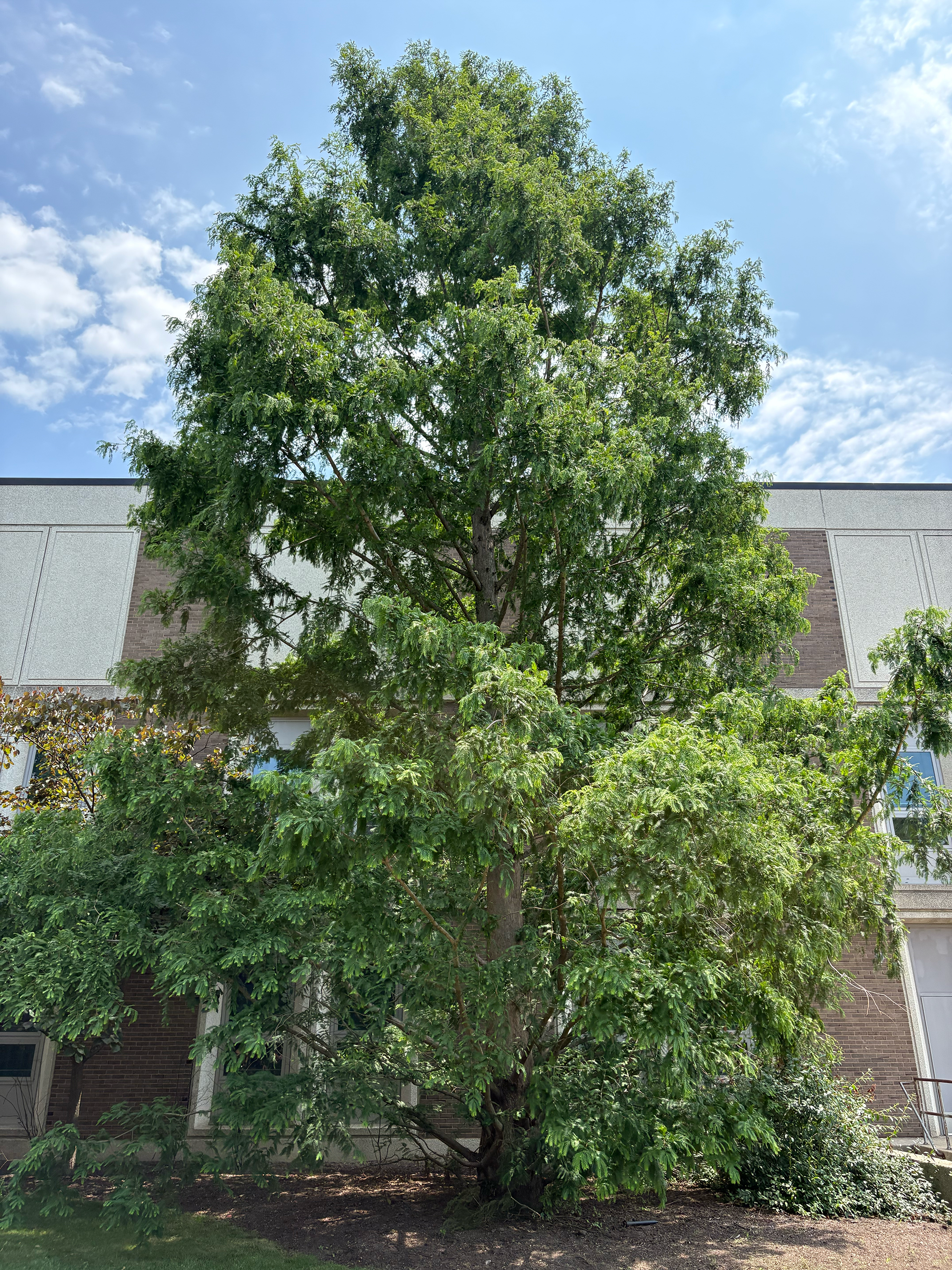


Dawn Redwood in summer

Dawn Redwood in Summer


Meet the Tree

Native to central China, Dawn Redwood was known only from fossils until living trees were discovered in 1941. Often called a "living fossil," it provides scientists with a rare glimpse into forests that existed millions of years ago.

Unlike most conifers, Dawn Redwood is deciduous, shedding its soft needles each autumn before producing fresh new growth in spring.

Ecological Benefits

Its towering canopy provides nesting habitat, cooling shade, and valuable carbon storage. The tree also supports birds and beneficial insects while helping improve air quality and manage stormwater.

Did You Know?


Before living Dawn Redwoods were discovered in China, scientists believed the species had been extinct for millions of years and knew it only from fossils.

Quick Facts

Native: Central China

Type: Deciduous Conifer

Size: 70 to 100 ft tall × 25 to 40 ft wide

Sun: Full Sun

Water: Moderate to High

Growth Rate: Fast

Cones: Small rounded cones

Fall Color: Coppery orange


Botanical Profile

Family: Cupressaceae

Common Names: Dawn Redwood

Genus Meaning: Metasequoia means "similar to Sequoia."

Species Meaning: glyptostroboides means "resembling Glyptostrobus," another conifer genus.


How to Recognize It

Look for these distinctive characteristics:

  • Soft feathery needles arranged opposite each other
  • Straight trunk with flared base
  • Fibrous reddish-brown bark
  • Small rounded cones
  • Deciduous needles
  • Tall pyramidal form

Growing Conditions

Light: Full sun

Soil: Moist, well-drained soil

Moisture: Moderate to high

Hardiness: USDA Zones 4 to 8

Tolerance: Wet soils and urban conditions