Meet the Tree
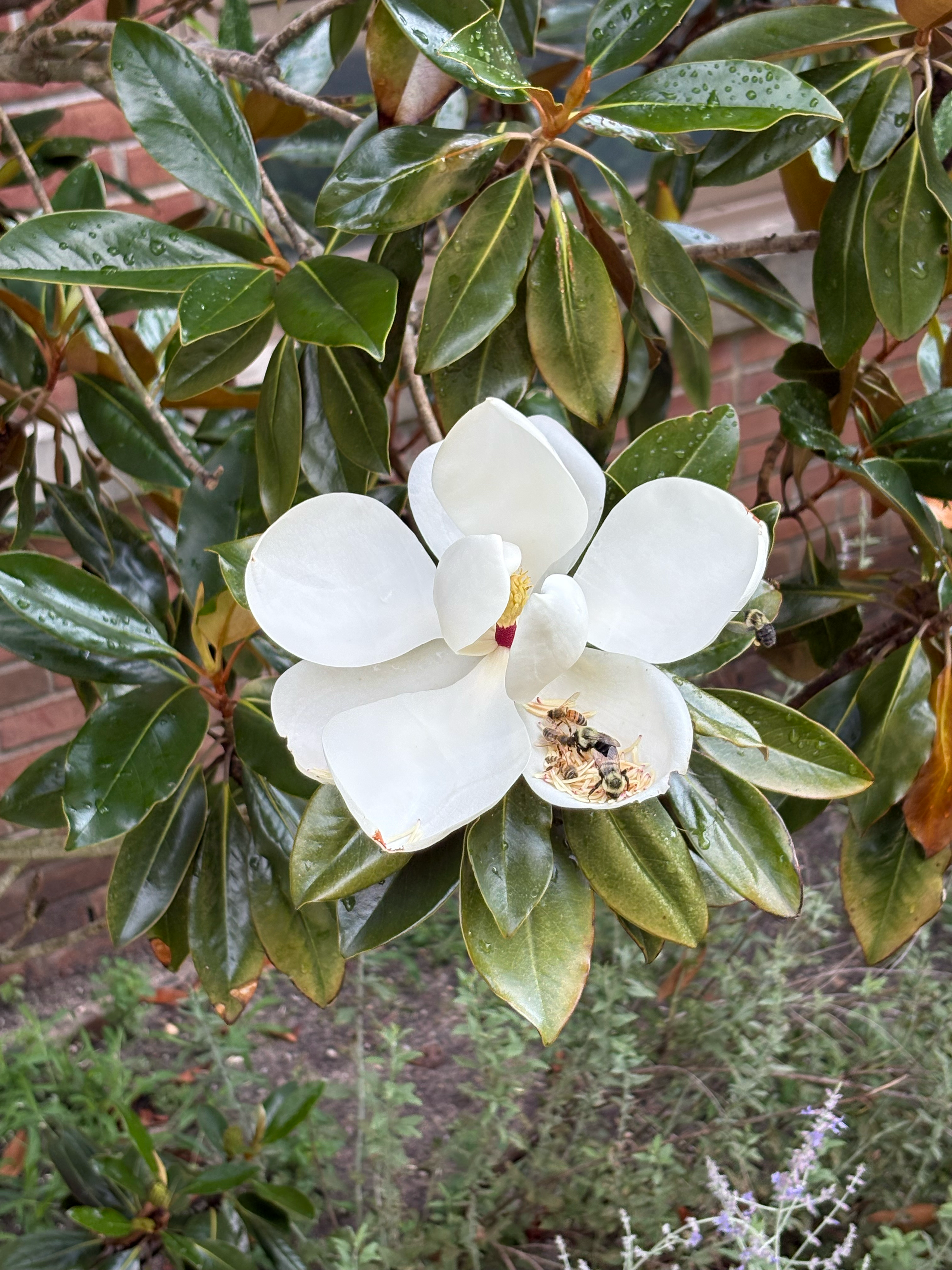
'Little Gem' is a compact cultivar of the Southern Magnolia, selected for its smaller
size, abundant flowers, and extended blooming season. Unlike the towering species,
it fits comfortably into gardens and campus landscapes while retaining the same iconic
blossoms and evergreen foliage.
Its narrow habit makes it especially valuable where space is limited.
Ecological Benefits
The fragrant flowers attract native bees and beetles, while the evergreen canopy provides
year-round shelter for birds. Its dense foliage also helps reduce noise, improve air
quality, and moderate temperatures.
Quick Facts
Native: Cultivar of a species native to the southeastern United States
Type: Evergreen Tree
Size: 20 to 30 ft tall × 10 to 15 ft wide
Sun: Full Sun to Partial Shade
Water: Moderate
Growth Rate: Slow to Medium
Flowers: Large fragrant white flowers from late spring through summer
Fall Color: Evergreen
Botanical Profile
Family: Magnoliaceae
Common Names: Little Gem Southern Magnolia
Genus Meaning: Magnolia honors French botanist Pierre Magnol.
Species Meaning: grandiflora means "large-flowered."
How to Recognize It
Look for these distinctive characteristics:
- Glossy evergreen leaves
- Rusty-brown leaf undersides
- Large fragrant white flowers
- Upright narrow form
- Cone-like fruit with bright red seeds
- Smooth gray bark
Growing Conditions
Light: Full sun to partial shade
Soil: Rich, well-drained, slightly acidic soil
Moisture: Moderate
Hardiness: USDA Zones 7 to 9
Tolerance: Heat, humidity, and urban conditions