American Sweetgum (Liquidambar styraciflua)

"Star-shaped leaves and brilliant autumn color make American Sweetgum one of nature's greatest seasonal performers."

Take a Moment: Pick up a fallen leaf and notice its distinctive five-pointed star shape. In autumn, pause beneath the canopy as the foliage glows with a remarkable mix of yellow, orange, red, and purple, often all on the same tree.

Why We Love This Tree

Sweetgum delivers one of the longest and most colorful fall displays in the arboretum. Its striking leaves, strong branching structure, and changing colors ensure there is always something new to admire.

Its seasonal transformation reminds us that change can be one of nature's greatest works of art.
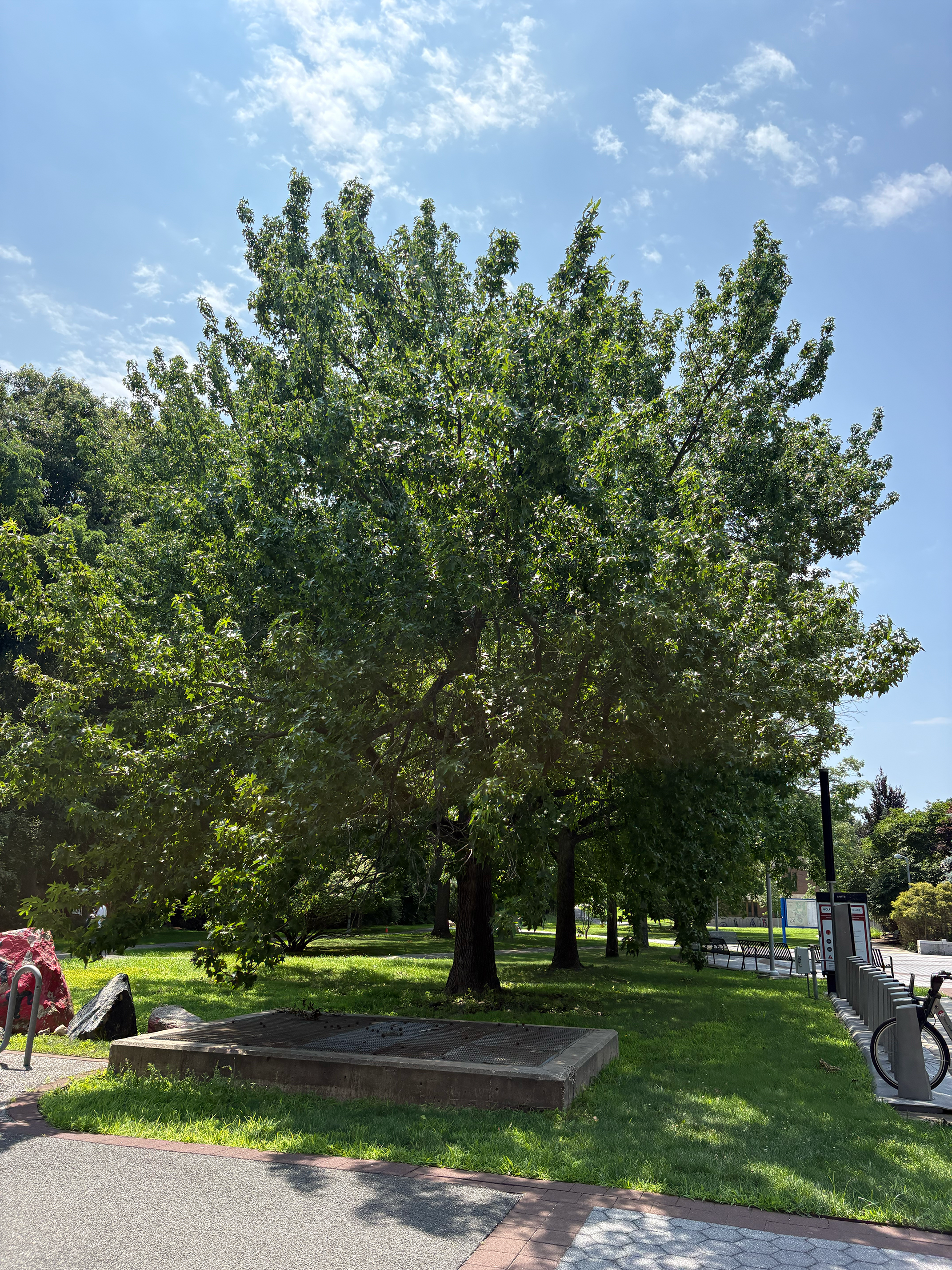


american sweetgum tree in summer

American Sweetgum in Summer


Meet the Tree

Native to the eastern United States, American Sweetgum is a large deciduous tree valued for its symmetrical form, glossy star-shaped leaves, and exceptional fall color. It grows naturally in bottomland forests but adapts well to parks, campuses, and urban landscapes.

As it matures, the bark develops deep ridges with distinctive corky wings on younger branches, giving the tree year-round character.

Ecological Benefits

Sweetgum provides food and shelter for a wide variety of wildlife. Goldfinches, purple finches, squirrels, and chipmunks feed on its seeds, while numerous native butterflies and moths rely on it as a host plant. Its broad canopy also provides shade, captures carbon, and improves air quality.

Did You Know?


The fragrant resin once collected from Sweetgum trees was used in perfumes, medicines, and even chewing gum.

Quick Facts

Native: Eastern United States & Central America

Type: Deciduous Tree

Size: 60 to 90 ft tall × 40 to 50 ft wide

Sun: Full Sun

Water: Moderate

Growth Rate: Medium to Fast

Fruit: Spiky seed balls

Fall Color: Yellow, orange, red, purple


Botanical Profile

Family: Altingiaceae

Common Names: American Sweetgum, Sweetgum

Genus Meaning: Liquidambar means "liquid amber," referring to the tree's fragrant resin.

Species Meaning: styraciflua means "flowing with storax," another reference to its aromatic sap.


How to Recognize It

Look for these distinctive characteristics:

  • Star-shaped leaves with five pointed lobes
  • Corky ridges on young branches
  • Spiky seed balls
  • Straight trunk
  • Deeply furrowed bark
  • Brilliant multicolored fall foliage

Growing Conditions

Light: Full sun

Soil: Moist, well-drained soil

Moisture: Moderate

Hardiness: USDA Zones 5 to 9

Tolerance: Wet soils and urban conditions