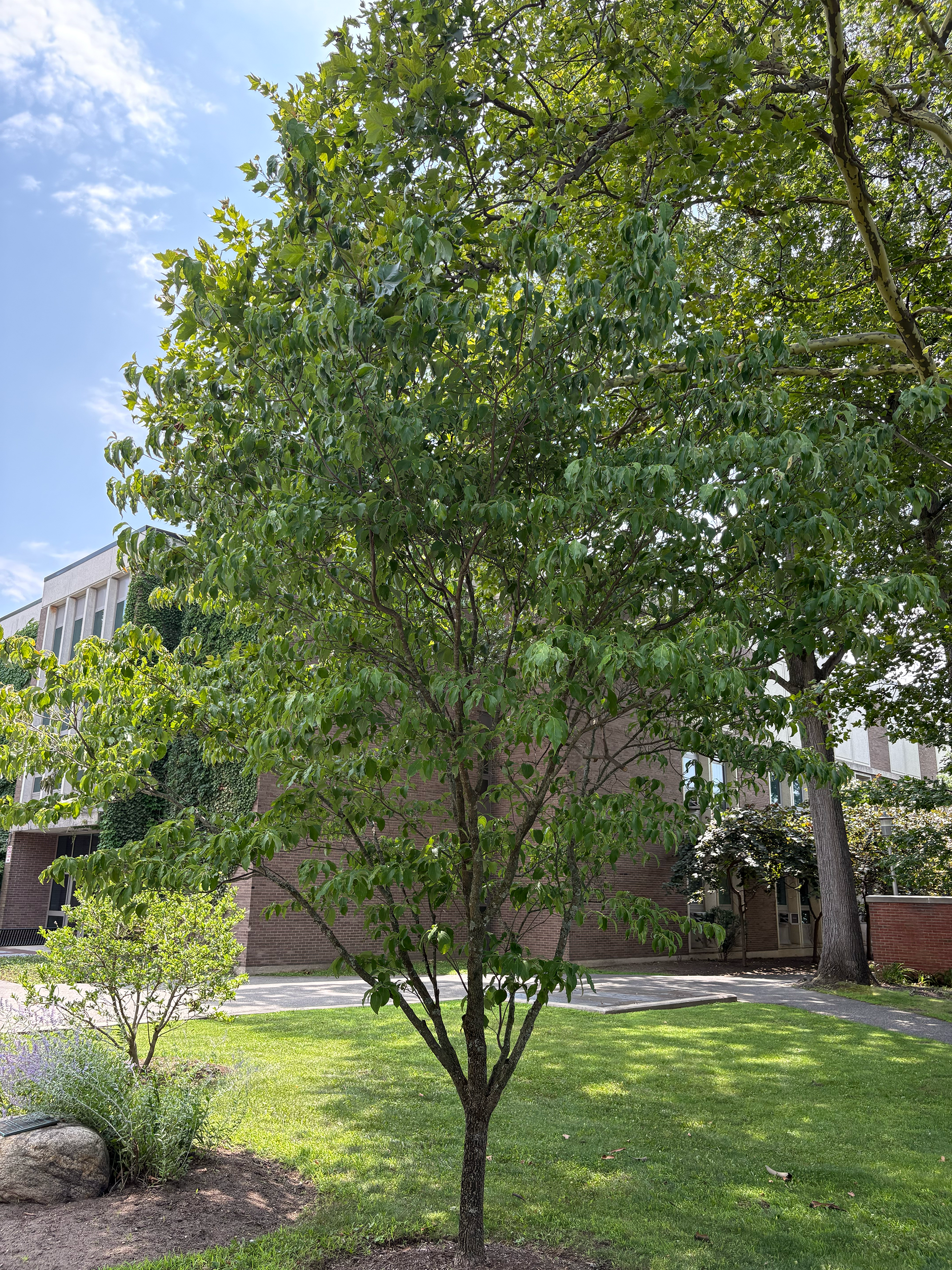
Meet the Tree
Native to the forests of eastern North America, Flowering Dogwood is a small understory
tree that thrives beneath larger woodland canopies. Its iconic white "flowers" are
actually four showy bracts that surround a cluster of tiny true flowers.
Long valued as both a landscape tree and a symbol of spring, Flowering Dogwood continues
to be one of the most recognizable native trees in American gardens and forests.
Ecological Benefits
Flowering Dogwood is an exceptional wildlife tree. Its nectar-rich flowers support
native pollinators, while its berries provide an important food source for more than
35 species of birds. Dense branching also offers nesting sites and protective cover
for wildlife.
Quick Facts
Native: Eastern North America
Type: Deciduous Tree
Size: 15 to 30 ft tall × 15 to 30 ft wide
Sun: Partial Shade to Full Sun
Water: Moderate
Growth Rate: Slow to Medium
Flowers: White or pink bracts surrounding small flowers in spring
Fall Color: Scarlet to burgundy
Botanical Profile
Family: Cornaceae
Common Names: Flowering Dogwood
Genus Meaning: Cornus is the Latin name for dogwood.
Species Meaning: florida means "flowering."
How to Recognize It
Look for these distinctive characteristics:
- Four white showy bracts in spring
- Layered horizontal branching
- Opposite oval leaves
- Bright red berries
- Blocky gray bark on mature trees
- Brilliant red fall color
Growing Conditions
Light: Partial shade to full sun
Soil: Rich, moist, well-drained soil
Moisture: Moderate
Hardiness: USDA Zones 5 to 9
Tolerance: Partial shade and woodland conditions