River Birch (Betula nigra)

"Peeling cinnamon-colored bark and graceful branching make River Birch one of North America's most distinctive native trees."

Take a Moment: Run your eyes along the trunk and notice the papery layers of bark curling away in shades of cinnamon, tan, and cream. Even in winter, the bark provides year-round beauty.

Why We Love This Tree

River Birch is a tree of movement and texture. Its peeling bark, fluttering leaves, and graceful form create visual interest throughout every season.

It reminds us that beauty is often found in change.
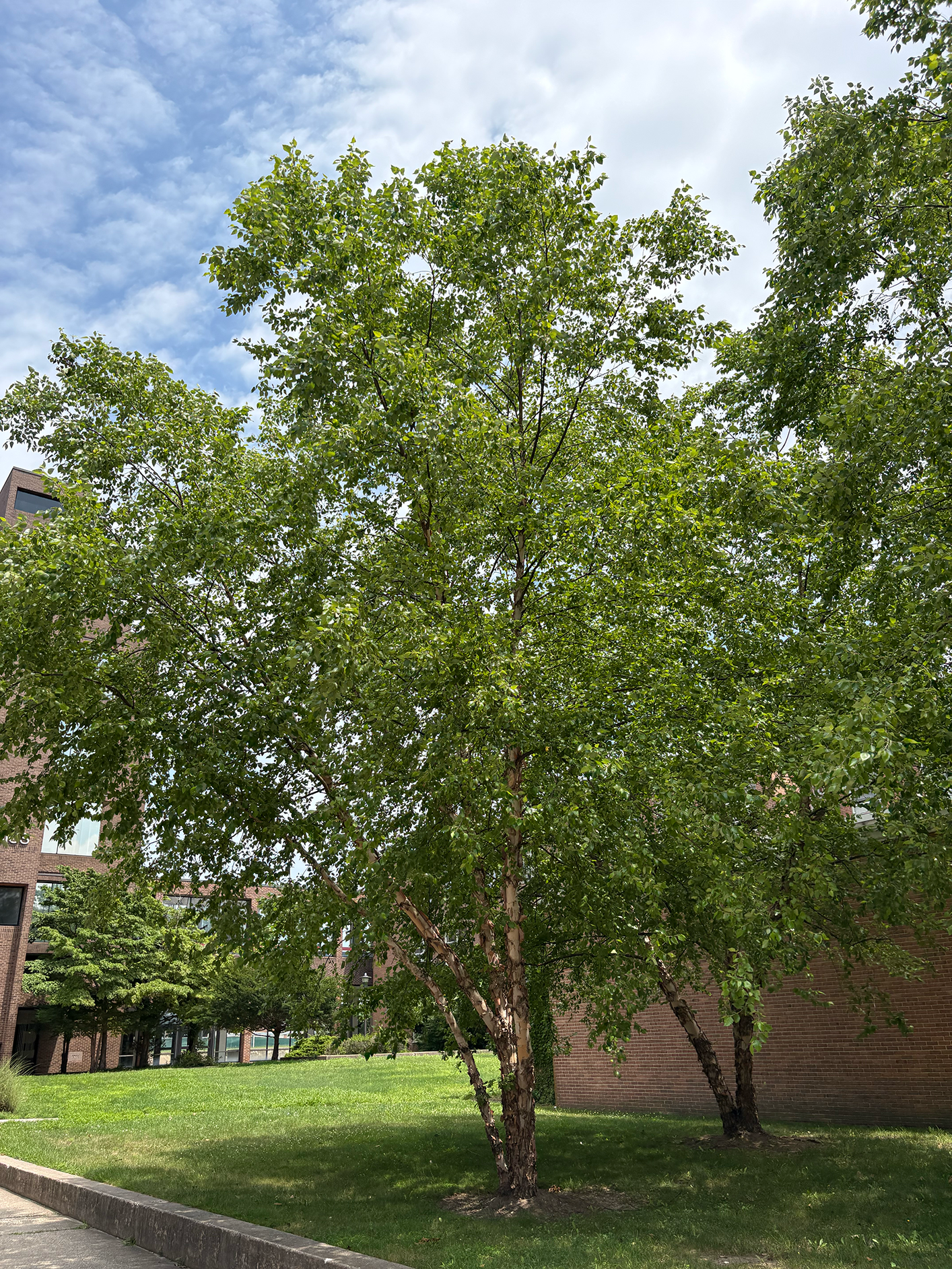


River birch tree in summer

River Birch in Summer


Meet the Tree

Native to streambanks and floodplains throughout the eastern United States, River Birch is exceptionally well adapted to moist soils. Unlike most birches, it tolerates heat and humidity, making it one of the best choices for landscapes across the Southeast and Mid-Atlantic.

Its peeling bark becomes more striking with age, giving mature trees year-round ornamental appeal.

Ecological Benefits

River Birch supports hundreds of native insects that provide food for birds and other wildlife. Its roots help stabilize streambanks, reduce erosion, and improve water quality, while its canopy provides cooling shade.

Did You Know?


River Birch is the only North American birch naturally adapted to life along rivers and floodplains.

Quick Facts

Native: Eastern United States

Type: Deciduous Tree

Size: 40 to 70 ft tall × 40 to 60 ft wide

Sun: Full Sun to Partial Shade

Water: Moderate to High

Growth Rate: Fast

Flowers: Catkins in spring

Fall Color: Golden yellow


Botanical Profile

Family: Betulaceae

Common Names: River Birch, Red Birch

Genus Meaning: Betula is the Latin word for birch.

Species Meaning: nigra means "black."


How to Recognize It

Look for these distinctive characteristics:

  • Peeling cinnamon-colored bark
  • Diamond-shaped leaves
  • Fine serrated leaf edges
  • Multi-stemmed habit is common
  • Slender catkins
  • Golden fall color

Growing Conditions

Light: Full sun to partial shade

Soil: Moist, acidic soil

Moisture: High; tolerates flooding

Hardiness: USDA Zones 4 to 9

Tolerance: Heat, humidity, and wet soils