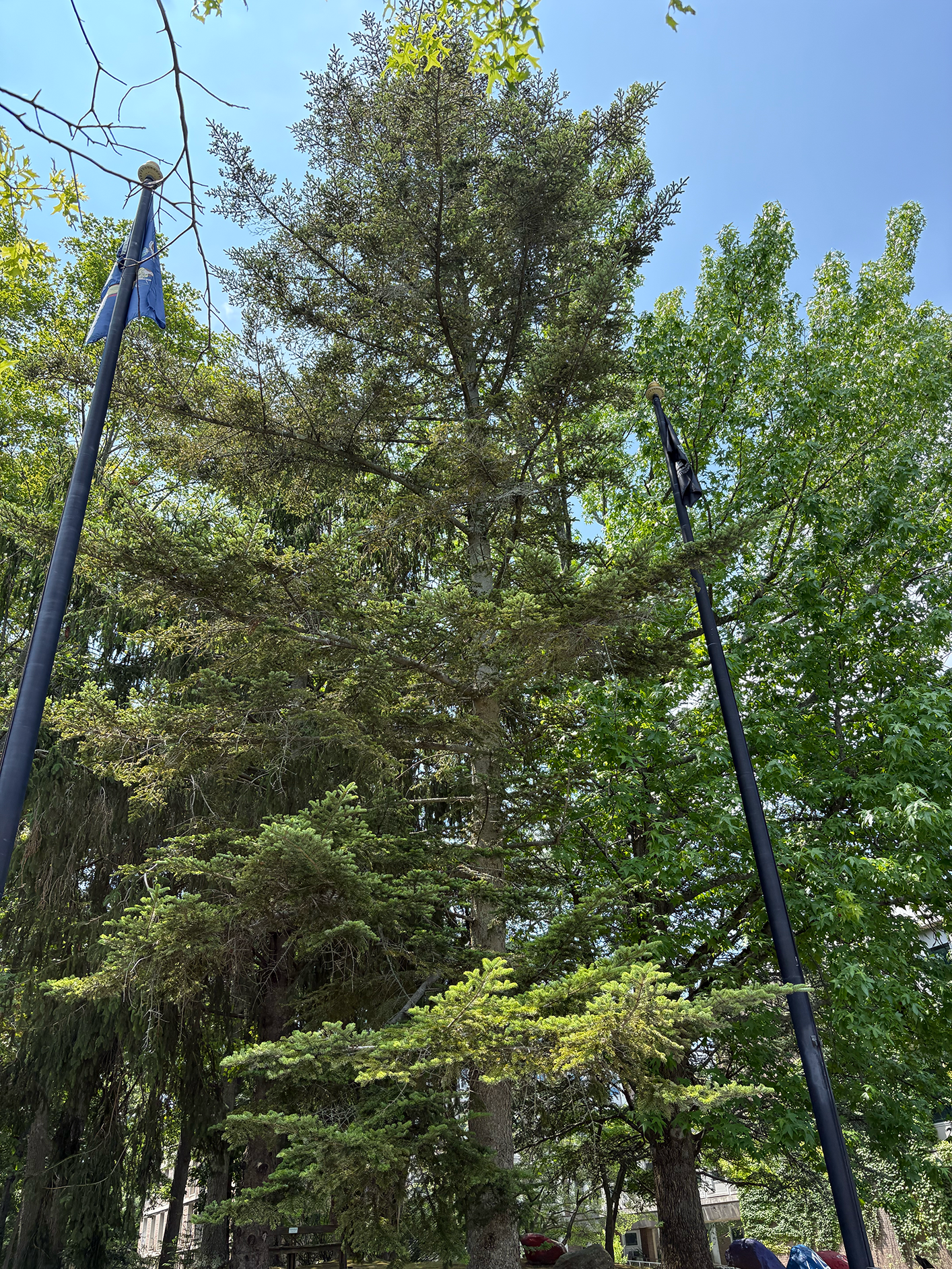
Meet the Tree
Native to the mountains of the western United States, White Fir is prized for its
broad pyramidal form and remarkably soft needles. Unlike many evergreens, its needles
are gentle to the touch and release a pleasant citrus scent when crushed.
Each year, upright cones develop high in the canopy before gradually breaking apart
to release their seeds, a defining characteristic of true firs.
Today, White Fir is widely planted in parks, campuses, and arboretums for its beauty,
adaptability, and long lifespan.
Ecological Benefits
White Fir provides year-round shelter for birds and small mammals while helping stabilize
soil and improve air quality. Its dense evergreen canopy offers valuable winter cover,
and its seeds provide food for species such as chickadees, nuthatches, crossbills,
and squirrels.
Quick Facts
Native: Western United States & Northern Mexico
Type: Evergreen Conifer
Size: 30 to 70 ft tall × 15 to 30 ft wide
Sun: Full Sun to Partial Shade
Water: Moderate
Growth: Slow
Cones: Spring (cones mature in late summer to fall)
Fall Color: Evergreen
Botanical Profile
Family: Pinaceae
Common Names: White Fir, Concolor Fir
Genus Meaning: Abies is the classical Latin name for fir trees.
Species Meaning: concolor means "of one color," referring to the tree's needles, which are the same silvery
blue-green on both their upper and lower surfaces.
How to Recognize It
Look for these distinctive characteristics:
- Soft, flattened blue-green needles with a silvery appearance
- Needles curved upward, often forming a "C" shape around the twig
- Tall, symmetrical pyramidal form
- Upright cylindrical cones that sit on top of the branches
- Smooth gray bark on young trees that becomes furrowed with age
- Pleasant citrus fragrance when needles are gently crushed
Growing Conditions
Light: Full sun to partial shade
Soil: Moist, well-drained soil
Moisture: Moderate; appreciates consistent moisture while becoming moderately drought tolerant
once established
Hardiness: USDA Zones 4 to 7
Tolerance: Adaptable to heat, drought, and urban conditions better than many other fir species