Crape Myrtle (Lagerstroemia indica)

"Brilliant summer flowers and beautiful peeling bark make Crape Myrtle a standout long after spring has ended."

Take a Moment: Visit during summer when the canopy bursts into colorful blooms that can last for weeks. In winter, take a closer look at the smooth bark as it peels away to reveal patches of cream, cinnamon, and gray.

Why We Love This Tree

Few trees provide such a long season of color. Crape Myrtle bridges the gap between spring and autumn with vibrant flowers, attractive bark, and dependable fall foliage.

Its lasting display reminds us that beauty doesn't have to be fleeting.
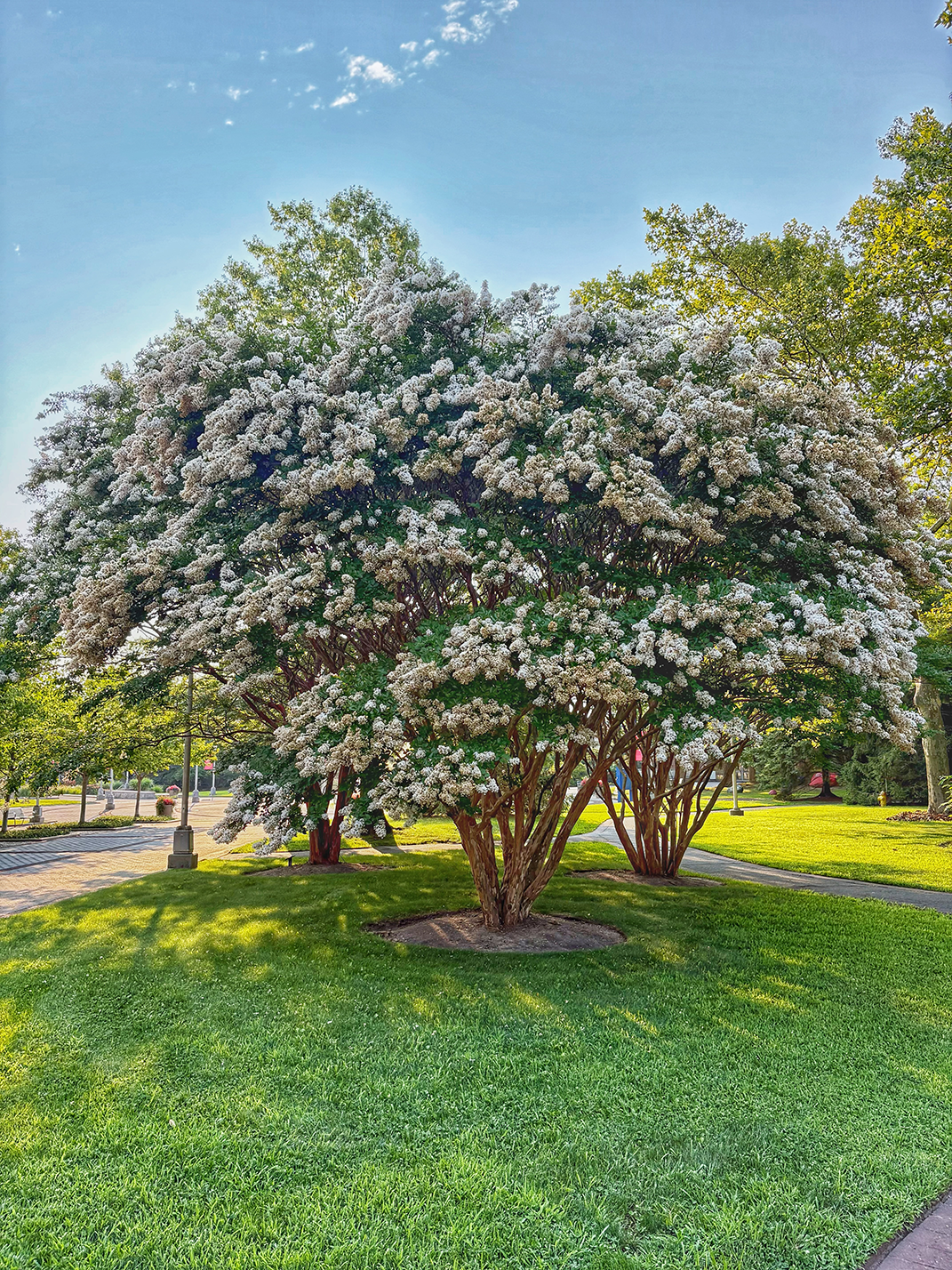


crape myrtle in summer

Crape Myrtle in Summer


Meet the Tree

Native to eastern Asia, Crape Myrtle has become one of the world's most popular ornamental trees. It is prized for its exceptionally long bloom period, colorful flowers, and attractive exfoliating bark that provides winter interest.

Hundreds of cultivars are available in shades of white, pink, red, lavender, and purple.

Ecological Benefits

Its flowers attract bees, butterflies, and other pollinators throughout the summer, while its branching structure provides shelter for birds and beneficial insects. Its drought tolerance also makes it well suited for sustainable landscapes.

Did You Know?


Crape Myrtle is often called the "Lilac of the South" because of its spectacular summer blooms and exceptional heat tolerance.

Quick Facts

Native: China & Korea

Type: Deciduous Tree

Size: 15 to 25 ft tall × 10 to 20 ft wide

Sun: Full Sun

Water: Moderate

Growth Rate: Medium to Fast

Flowers: Summer

Fall Color: Orange, red, or yellow


Botanical Profile

Family: Lythraceae

Common Names: Crape Myrtle

Genus Meaning: Lagerstroemia honors Swedish merchant Magnus von Lagerström.

Species Meaning: indica means "of India," although the species is native to East Asia.


How to Recognize It

Look for these distinctive characteristics:

  • Long-lasting crinkled flowers
  • Smooth peeling bark
  • Multi-stemmed habit
  • Rounded canopy
  • Opposite leaves
  • Brilliant fall color

Growing Conditions

Light: Full sun

Soil: Well-drained soil

Moisture: Moderate

Hardiness: USDA Zones 6 to 9

Tolerance: Heat, drought, and urban conditions