Weeping European Beech (Fagus sylvatica f. pendula)

"Sweeping branches and cascading foliage create a living sculpture that changes with every season."

Take a Moment: Stand beneath the gracefully arching branches and look upward through the curtain of leaves. In winter, the intricate framework of twisting limbs reveals the tree's remarkable architecture.

Why We Love This Tree

Weeping European Beech is more than a tree. Its flowing branches create a quiet retreat that invites visitors to slow down and experience the landscape from a different perspective.

Its graceful form reminds us that beauty can be found in movement as much as in structure.
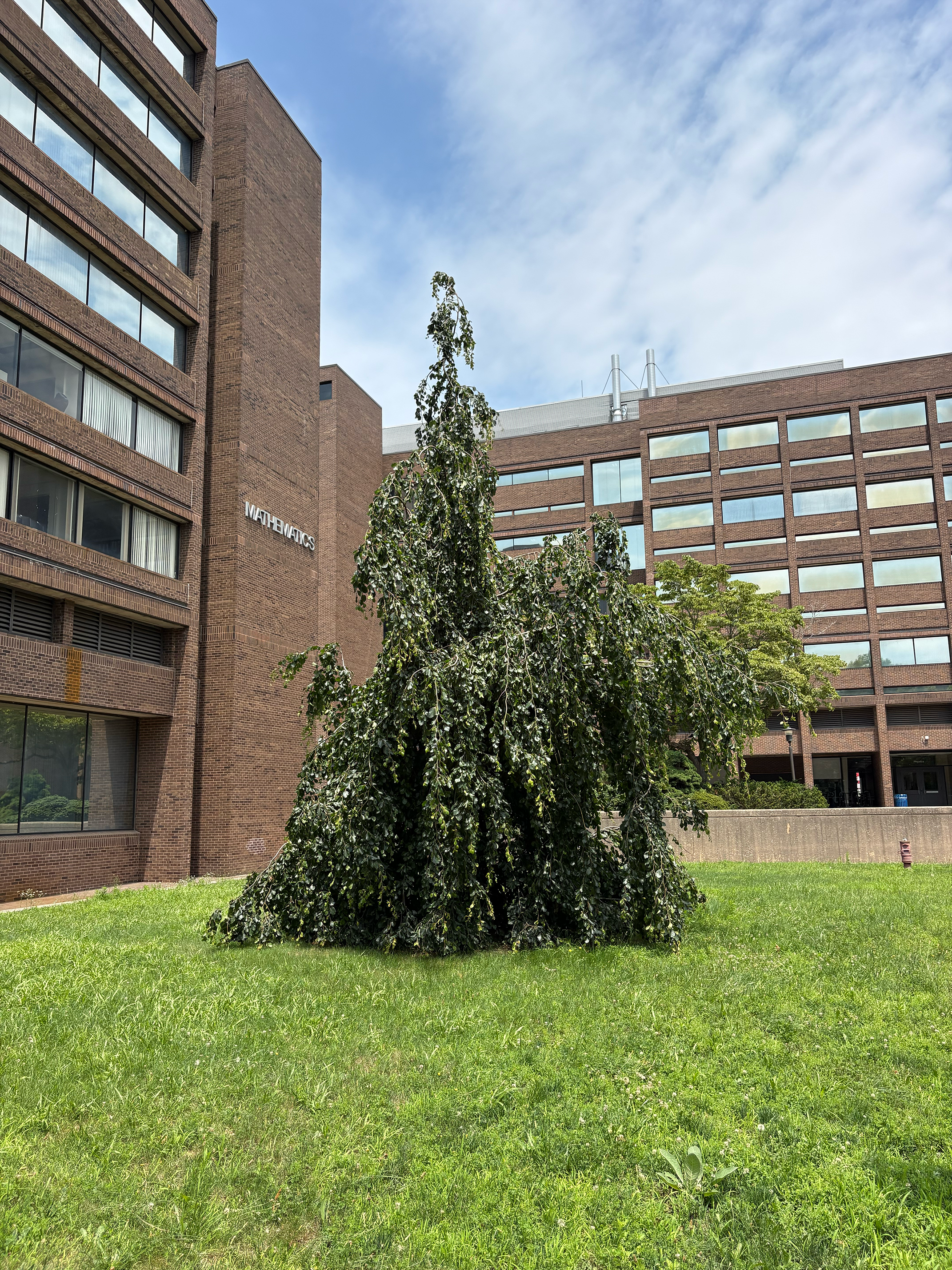


weeping european beech in summer

Weeping European Beech in Summer


Meet the Tree

Native to Europe, the Weeping European Beech is a distinctive cultivar selected for its cascading branches that often sweep to the ground. Over time, it develops into a broad, sculptural specimen with an unmistakable silhouette.

Its smooth gray bark and dense canopy provide beauty throughout every season, making it one of the most admired ornamental beeches in cultivation.

Ecological Benefits

Its broad canopy provides cooling shade, nesting sites for birds, and shelter for small mammals. Like all large trees, it also improves air quality, captures carbon, and helps moderate summer temperatures.

Did You Know?


No two Weeping European Beeches grow alike. Each develops its own unique branching pattern, making every mature specimen one of a kind.

Quick Facts

Native: Cultivar of a species native to Europe

Type: Deciduous Tree

Size: 30 to 50 ft tall × 40 to 60 ft wide

Sun: Full Sun to Partial Shade

Water: Moderate

Growth Rate: Slow

Fruit: Beechnuts in fall

Fall Color: Golden bronze


Botanical Profile

Family: Fagaceae

Common Names: Weeping European Beech

Genus Meaning: Fagus is the Latin word for beech.

Species Meaning: sylvatica means "of the forest."


How to Recognize It

Look for these distinctive characteristics:

  • Cascading, pendulous branches
  • Smooth silver-gray bark
  • Oval leaves with gently wavy edges
  • Broad, flowing canopy
  • Spiny beechnuts
  • Golden-bronze fall foliage

Growing Conditions

Light: Full sun to partial shade

Soil: Rich, well-drained soil

Moisture: Moderate

Hardiness: USDA Zones 4 to 7

Tolerance: Urban conditions once established