Atlas Cedar (Cedrus atlantica)

"Sweeping branches and blue-green needles give Atlas Cedar an unmistakable presence in the landscape."

Take a Moment: Step back and admire the broad, layered branches that create the tree's dramatic silhouette. Notice the clusters of short needles that shimmer in shades of blue-green throughout the year.

Why We Love This Tree

Atlas Cedar combines strength with elegance. Its sculptural form and evergreen foliage create a striking focal point in every season.

Its timeless beauty reflects the enduring character of some of the world's oldest forests.
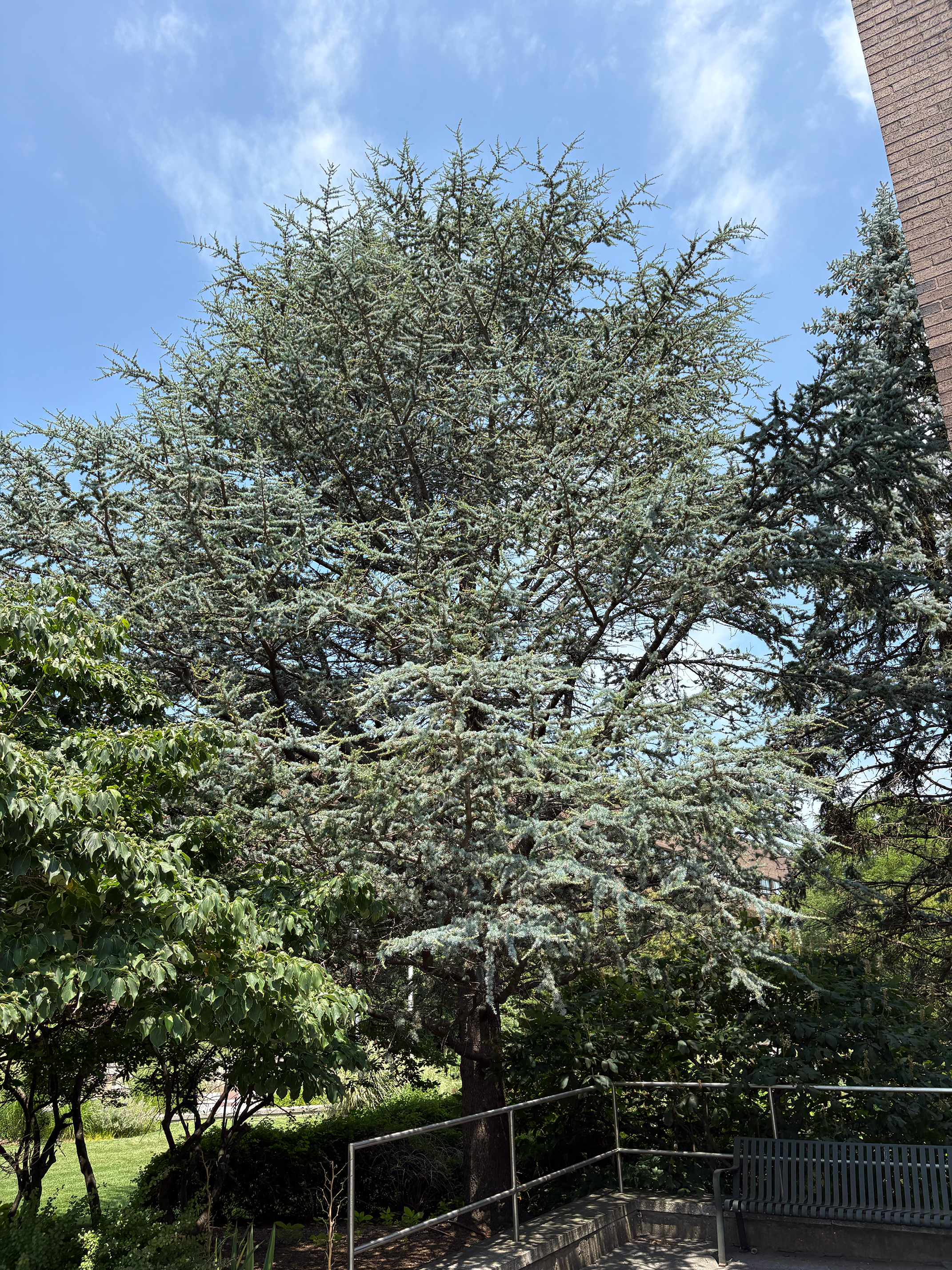


atlas cedar in summer

Atlas Cedar in Summer


Meet the Tree

Native to the Atlas Mountains of Morocco and Algeria, Atlas Cedar is a majestic evergreen valued for its broad crown and distinctive blue-green needles. It has become a favorite specimen tree in parks, estates, and arboretums around the world.

Mature trees develop large upright cones that slowly mature over two years before releasing their seeds.

Ecological Benefits

Atlas Cedar provides year-round shelter for birds while improving air quality and offering cooling shade. Its evergreen canopy helps reduce wind and creates protected habitat throughout the winter months.

Did You Know?


Atlas Cedar forests are home to the endangered Barbary macaque, Africa's only native monkey north of the Sahara.

Quick Facts

Native: Morocco & Algeria

Type: Evergreen Conifer

Size: 40 to 60 ft tall × 30 to 40 ft wide

Sun: Full Sun

Water: Moderate

Growth Rate: Medium

Cones: Upright cones mature over two years

Fall Color: Evergreen


Botanical Profile

Family: Pinaceae

Common Names: Atlas Cedar, Blue Atlas Cedar

Genus Meaning: Cedrus is the classical Latin name for cedar.

Species Meaning: atlantica refers to the Atlas Mountains.


How to Recognize It

Look for these distinctive characteristics:

  • Blue-green needle clusters
  • Broad layered branching
  • Upright barrel-shaped cones
  • Thick gray bark
  • Wide pyramidal crown
  • Evergreen foliage

Growing Conditions

Light: Full sun

Soil: Well-drained soil

Moisture: Moderate

Hardiness: USDA Zones 6 to 9

Tolerance: Drought and urban conditions once established