Shagbark Hickory (Carya ovata)

"Shaggy bark, nutritious nuts, and remarkable longevity make Shagbark Hickory one of the forest's greatest providers."

Take a Moment: Imagine as this tree matures the trunk will have long strips of bark peeling away from the tree. This distinctive feature gives the tree its common name and creates shelter for many woodland creatures.

Why We Love This Tree

Shagbark Hickory is both rugged and generous. It provides food, shelter, and beauty while standing as one of the longest-lived trees in eastern forests.

Its enduring presence reminds us that healthy forests are built over generations.
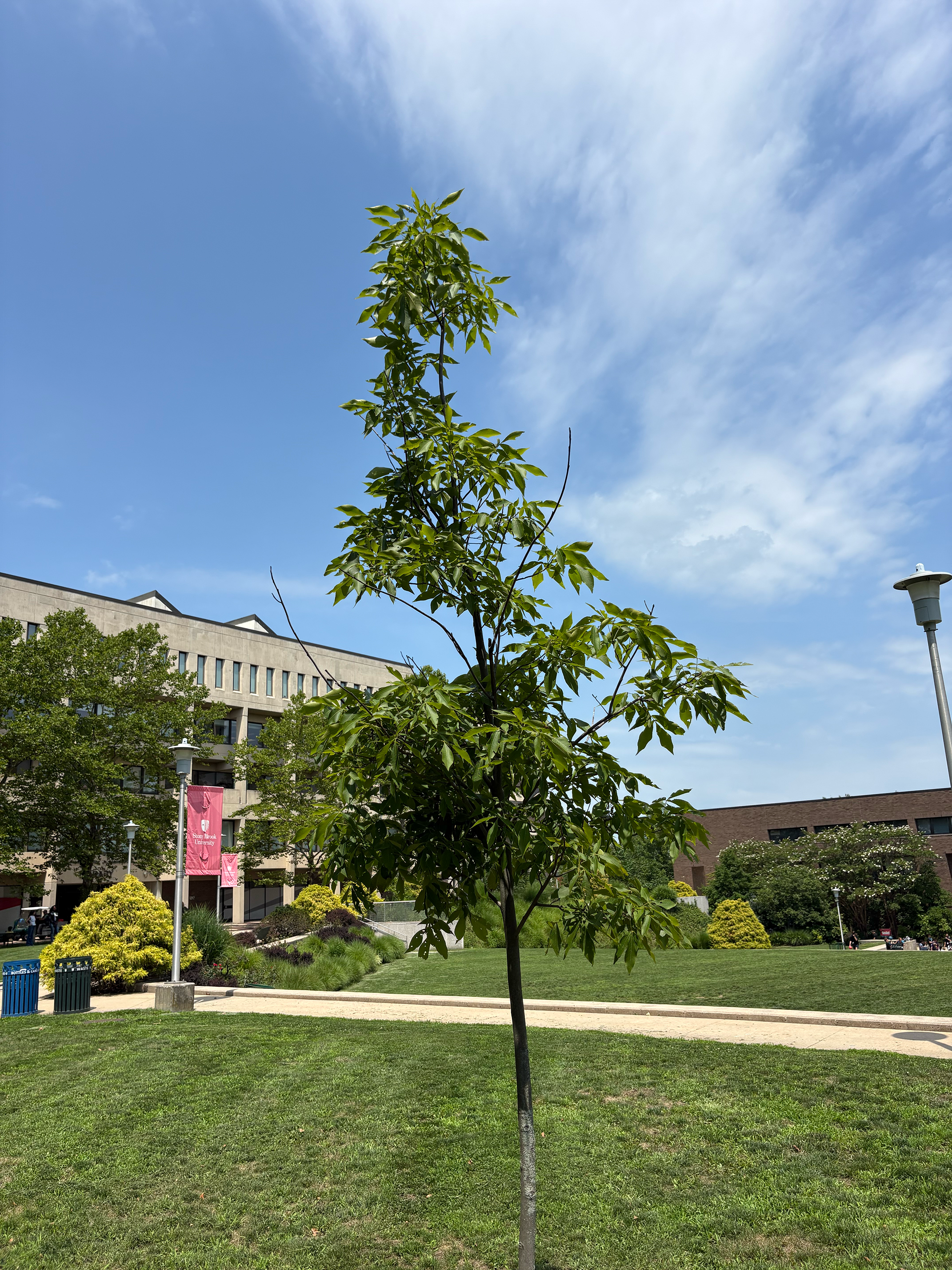


shagbark hickory in summer

Shagbark Hickory in Summer


Meet the Tree

Native to eastern North America, Shagbark Hickory is best known for its peeling bark and flavorful nuts. Mature trees develop a tall, straight trunk and broad canopy, becoming impressive specimens that can live for more than 200 years.

Its strong wood has long been valued for tool handles, furniture, and smoking meats.

Ecological Benefits

Shagbark Hickory is an ecological powerhouse. Its nutritious nuts feed squirrels, chipmunks, foxes, black bears, and many birds, while its loose bark provides critical summer roosting habitat for several bat species, including the endangered Indiana bat.

Did You Know?


The loose bark of Shagbark Hickory provides one of the most important natural roosting sites for several species of bats.

Quick Facts

Native: Eastern North America

Type: Deciduous Tree

Size: 60 to 80 ft tall × 40 to 50 ft wide

Sun: Full Sun

Water: Moderate

Growth Rate: Slow to Medium

Flowers: Catkins in spring

Fall Color: Golden yellow


Botanical Profile

Family: Juglandaceae

Common Names: Shagbark Hickory

Genus Meaning: Carya comes from the Greek word for walnut.

Species Meaning: ovata means "egg-shaped."


How to Recognize It

Look for these distinctive characteristics:

  • Long peeling bark strips
  • Compound leaves with five leaflets
  • Large edible nuts
  • Tall straight trunk
  • Rounded crown
  • Golden fall color

Growing Conditions

Light: Full sun

Soil: Deep, well-drained soil

Moisture: Moderate

Hardiness: USDA Zones 4 to 8

Tolerance: Drought once established